


Agentic AI: How autonomous shopping agents are potentially changing e-commerce
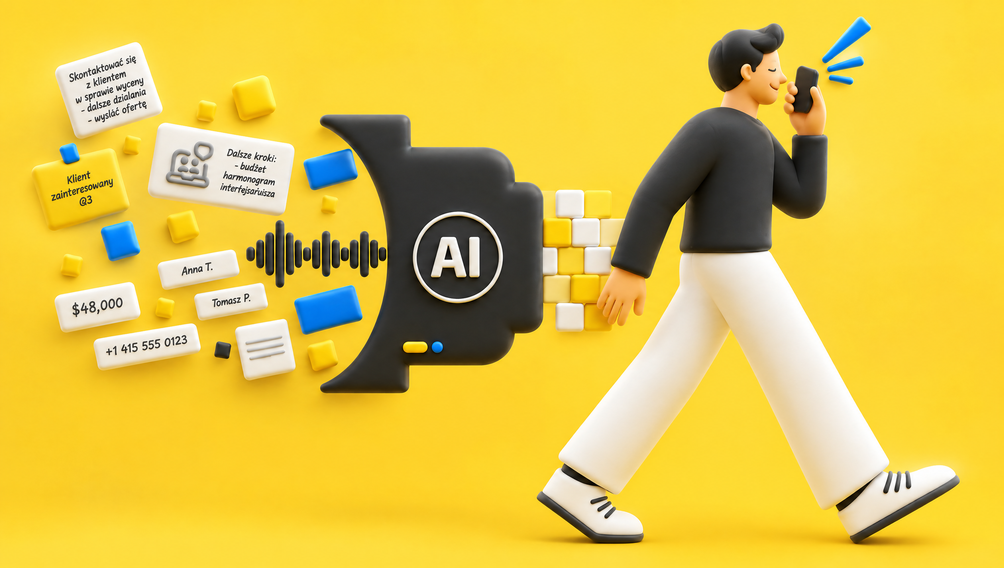
A fundamental shift is occurring in e-commerce: technology is moving from reacting to our queries to acting on our behalf. This transition defines a new era of commerce, called Agentic Commerce. AI Agents are becoming our personal shopping advisors, radically changing the rules of the game.
In this article, we will explain how AI Agents are changing the shopping journey and how e-commerce companies should adapt their architecture (Headless/Composable Commerce) to deliver clean product data to Agents (AIO). We will also present strategies that will allow your offering to be at the center of autonomous recommendations before your competition gets there.
Listen to the audio version of this article.

The end of searching, the beginning of acting
For years, interaction with e-commerce was based on the "search engine" model: you enter a query, you get a list of links, and then you make decisions and finalize the purchase yourself.
This era is ending. New tools based on Agentic Artificial Intelligence (Agentic AI) are no longer just text assistants; they are becoming autonomous shopping agents. Their goal is no longer conversation but the finalization of transactions and maximum personalization based on context. This is how online shopping will radically change.
>> Here you can read how your online store can utilize AI <<
This transition from "search engine" to "shopping agent" is a potential UX revolution. The Agentic AI finally remembers not only simple phrases but, above all, your intentions, logistical preferences, and shopping context to personalize results even beyond the boundaries of a single store. Store owners must understand that it will soon be the AI, not the landing page, that is the first point of contact with the customer. Implementing this technology will provide an invaluable advantage in this new shopping reality.

How does Agentic AI work?
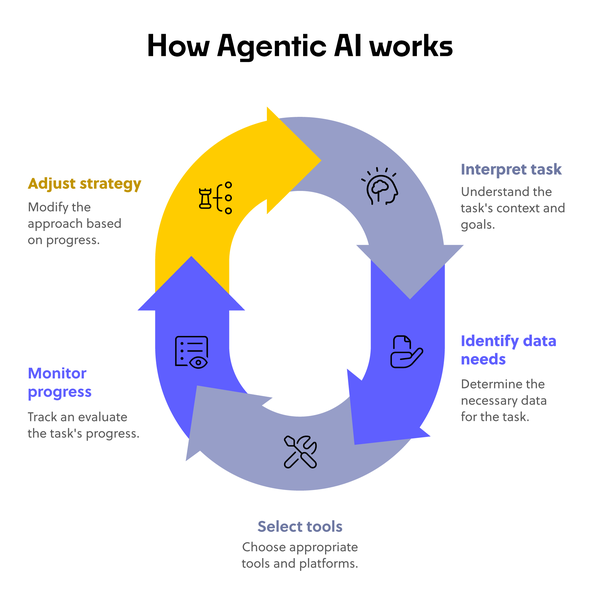
Agentic AI no longer just waits for our commands—it acts autonomously. By combining large language models, machine learning algorithms, and reinforcement learning, AI agents analyze data, adapt to changing environments, and become increasingly effective with every step.
Is your e-commerce holding back your growth?
See how our enterprise-class solutions eliminate technical debt and boost conversion rates!
Agentic AI: Your new personal shopping assistant
Agentic AI is a system that not only executes simple rules (like classic chatbots) but acts purposefully and autonomously. The key difference is that the agent needs an initial goal or user consent to start acting, but can then plan and execute subsequent steps on its own.
Definition of Agentic AI
Agentic AI is an artificial intelligence system capable of independently realizing goals on the user's behalf. For example, it can manage your subscriptions (e.g., order coffee) when its market availability changes or negotiate the delivery price. A key role in this process is played by an extensive algorithm responsible for continuous learning and optimization.
Memory and Context (Proactive Suggestions)
AI Agents track your browsing history, consumption patterns, and use this context for proactive suggestions.
Examples of agents and functionalities:
Google Assistant / Alexa: The most well-known examples. They can manage shopping lists, automatically order missing products (e.g., toilet paper, coffee) when they detect that supplies are running out, and compare prices across different stores based on transaction history.
Virtual Financial Agent: Agentic tools integrated with banks can monitor price drops at a vendor where you made a purchase on your behalf and automatically request a refund of the difference (so-called Price Protection).
Open-Source Frameworks (e.g., Auto-GPT/LangChain): Although in the development phase, these frameworks enable the creation of advanced agents capable of multi-step shopping planning and optimization.
Example of functionality (according to the capabilities of Google Assistant / Alexa):
If you bought a given product X (e.g., a water filter, pet food, contact lenses) a year ago, and the system knows that its average consumption cycle is 11 months, the Agent can search and remind you of the need for repurchase 3 weeks before the predicted end of stock, and can even propose scheduling the delivery. This goes beyond a simple email reminder, as the agent automatically selects the most favorable offer on the market at that given moment. This proactive intelligent agent is becoming an essential tool for the modern consumer, for whom the faster and more convenient, the better.
Impact on discovery
The agent's role is not just to recommend a product. The Agent has full insight into the shopping ecosystem: it finds the best price at the moment, checks logistics, and knows you prefer a specific carrier (e.g., a courier who always delivers packages after 5 PM). This maximizes customer convenience and shortens the decision-making process.
Hyper-personalization: Results tailored to intent
Agentic AI provides a level of personalization that no traditional recommendation engine can achieve.
Transition from static to real-time
Traditional recommendations are based on data from the last week. Agentic AI uses the context of the current session for dynamic personalization. If you are planning a trip to the mountains, and your session context includes location and bad weather, the Agent will immediately suggest products not only for hiking but also those resistant to rain and wind.
Beyond the store page
The key is that the Agent does not have to be limited to one store's data. It operates across the entire network (like a personal advisor), combining historical data from various sources, which radically increases the relevance of suggestions.
Shortening the purchase path
The Agent removes most of the friction in the purchasing process. It can, for example, buy a set of products based on a short, natural description ("I need a set for a weekend mountain trip for two, budget up to 1000 PLN"), eliminating as many as 10-15 clicks and self-comparison of prices.
Post-purchase automation and cost optimization
Agentic AI also becomes a valuable ally for the customer after the transaction, saving their time and money.
Autonomous price optimization
The Agent, knowing your price preferences and purchase history, can autonomously monitor price drops after a purchase (if the store offers Price Adjustment) or search for and apply loyalty discounts on your behalf, maximizing savings without your intervention.
Post-sale management
The Agent actively supervises logistical processes. It can automatically track shipments, proactively inform you about delays resulting from carrier difficulties, for example, and even initiate a return or exchange process if it detects that the product has poor reviews after its purchase by other customers with a similar profile. This radically increases convenience and satisfaction.
Agentic Commerce for the store: How to provide fuel for AI?
In light of this revolution, e-commerce managers must change their approach to architecture. For AI Agents to recommend your products, you must facilitate their access to your data.
The Requirement for clean data (AIO)
AI Agents are hungry for information. To effectively recommend your products, they must have access to clean, reliable, and comprehensive product data—significantly better than traditional SEO metadata. This forces the adoption of the Architecture-as-Information-Object (AIO) principle.
Architectural decision
A solid solution that may interest you is Headless/Composable Commerce, which provides flexibility, speed, and an API-first architecture. This solution will help deliver the "fuel" that Agentic AI needs to direct traffic to your store.
Thanks to this, you will gain the ability to fully understand how the recommendation algorithm works globally. This will allow you to precisely adjust your content strategy for the new consumer of the digital age.
Summary: AI Convenience in E-commerce
The future of commerce undoubtedly moves towards maximum user convenience, and AI Agents are becoming useful and convenient intermediaries in the purchasing process. Stores that focus on providing AI Agents with the best access to clean and comprehensive product data will be able to count on an advantage over the competition, as their assortment will be at the center of autonomous recommendations.
Do you want to know if your current e-commerce architecture is ready for the challenges of Agentic AI? Contact us—we will analyze your needs and show you how to provide your products with the fuel necessary for success in this new era of commerce.


Let's talk about potential areas of collaboration!
Hi!
during the first consultation we'll analyze your goals through the lens of ROI and operational risk. Whether we're building an Enterprise system, an application, or an AI automation — together we'll plan an architecture that eliminates your technical debt and unlocks scalability.


You can find more articles on this topic on our blog
12 AI agents, 5 layers, no recruitment | BeeCommerce
How we built an AI development team of 12 AI agents that supports a software house at every stage of the process: from analyzing new ideas and planning the architecture, through development, code review, testing, and security, all the way to SEO, analytics, and deployment on Kubernetes—without recruitment, without onboarding, and without unnecessary operational overhead.
6 min
Read more

Agentic Commerce: How to Prepare Your E-commerce Business for the Era of Autonomous AI Shopping?
Agentic Commerce is revolutionizing shopping. Learn how to prepare your e-commerce business for the era of autonomous AI agents by optimizing data, APIs, and headless architecture. See how BeeCommerce can help you!
8 min
Read more
AI in e-commerce. Why is artificial intelligence a must-have for business?
AI is not just about commonly known chatbots. Artificial intelligence offers much more for business. Check out how applying AI to e-commerce will help you increase sales and grow your online store on other levels.
4 min
Read more