

Business Agility: Why business speed matters more than site speed in E-commerce
In the world of e-commerce, a common belief has taken root: technology has one main goal—to make a website load fractions of a second faster. While performance is critical, the industry too often forgets the most important metric: organizational agility. The time has come to stop talking exclusively about how fast images pop up on the screen and start talking about how fast your idea can reach the customer. Today, we focus on exactly that—streamlining the speed of your business operations, not just your website.
Because Headless architecture, which we will discuss, isn't just about optimizing site rendering; it’s primarily about removing the barriers that slow down key business decisions.
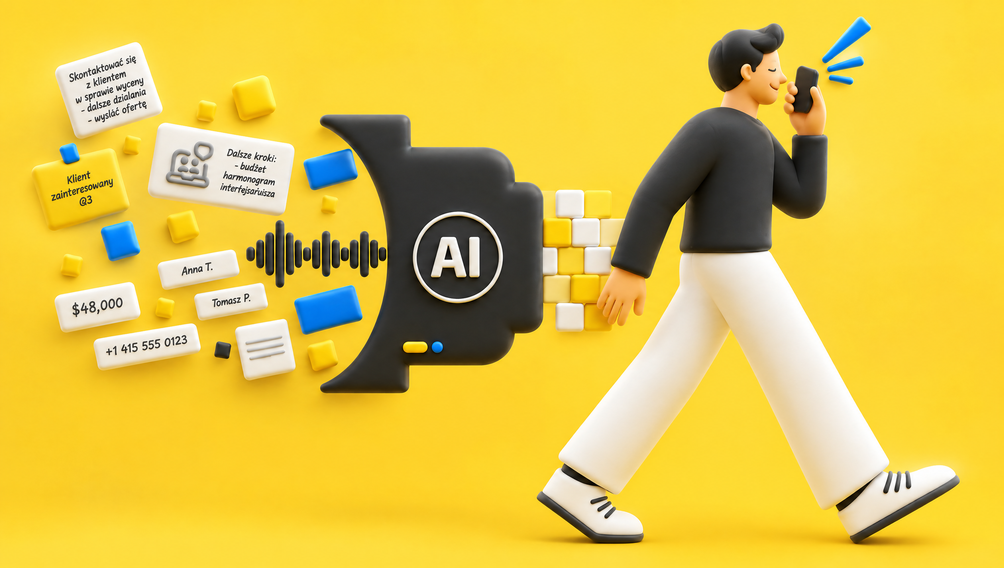
Listen to the audio version of this article.

The "critical mass" of the monolith
Let’s use our imagination and visualize your store as a building. In classic monolithic architecture, everything is "poured in concrete." The building, while pleasant to the eye, is very "static"—unchanging and rigid. Want to move a window? You have to break through load-bearing walls and worry if the whole roof will collapse on your head. You’d like to remove one wall, but you fear it will destabilize the entire structure.
In our field, we call this tight coupling - a strong interdependence between modules.
In such an environment, every visual change becomes a high-risk operation:
Complexity of Dependencies: There is a massive number of shared logical, business, and visual elements that affect one another.
Difficult Modification: The complexity of the process makes it extremely hard to measure the effectiveness of changes, and tracking their impact on the rest of the system becomes a challenge.
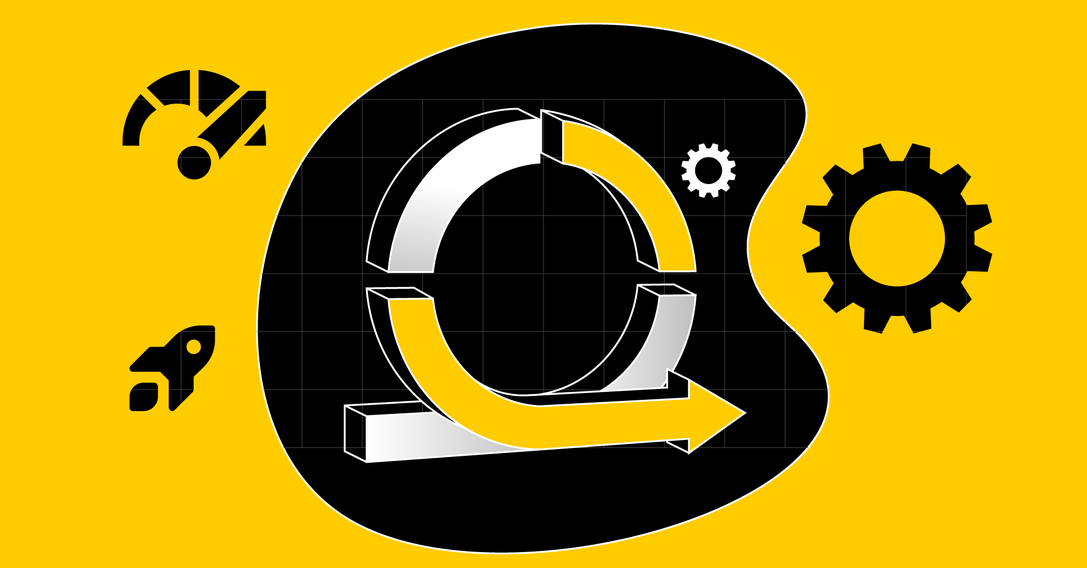
The Decision Loop: Marketing > Ticket > Sprint > QA > Release. The result is software that loads slowly and blocks business results.
Business Consequence: Abandoning experiments because every iteration involves too much cost and risk. Ultimately, actions are scrapped due to the high "entry cost" of a change.
The Solution? Headless as an organizational accelerator
Choosing Headless is like swapping concrete for LEGO bricks. Here, the frontend becomes a completely separate layer, no longer just a "presentation," but a standalone module.
With this freedom, developers can easily implement advanced optimizations, such as lazy loading, an optimization technique that delays the loading of resources (e.g., product images) until the user actually needs them while scrolling through down.
How does this change work dynamics?
Isolated Risk: Layout changes or data flow modifications happen only on a specific piece of the puzzle.
Operational Independence: Modifying the visual layer is entirely independent and theoretically carries a much lower chance of breaking critical systems. Payments, search, or inventory won't suffer due to changes on the "other side" of our metaphorical building.
Decoupled Evolution: The frontend evolves without waiting for a backend rebuild.
Is your e-commerce holding back your growth?
See how our enterprise-class solutions eliminate technical debt and boost conversion rates!
Paradigm Shift: From "big releases" to smart toggles
In the traditional model, every change is a high-risk event. Headless architecture changes this approach by introducing flexibility at the operational level.
Because the Content Management System (CMS) is completely separated from the store engine, your company gains a new measure of efficiency:
Visual Editing without IT: Category Owners can independently manage content and arrange layouts using ready-made components. IT is freed from tedious, repetitive tasks.
A/B Tests in an Hour, Not Two Weeks: By separating development environments and project versions, you can check how a new feature affects conversion almost in real-time.
Modularity over Monolith: You introduce changes at the level of specific "bricks" (components) rather than the entire, heavy platform, drastically shortening the time-to-market.
Collaboration: Better synergy between marketing and technology — everyone focuses on what they do best.
How to switch to Headless? Evolution, not revolution
It’s safe to guess that nothing scares a board of directors more than the vision of shutting down a functioning store for six months. Our answer is phased implementation, which gradually "outgrows" the monolith with modern modules rather than tearing it down. You can, after all, implement headless on top of a traditional e-commerce platform.
There is no need to turn the store upside down immediately when the possibility of a systematic, step-by-step upgrade exists.
Phased implementation allows for:
Starting with Bottlenecks: You can start small, perhaps by moving just the product page or a campaign landing page to a headless CMS like Storyblok, while the cart and payments are still handled by the old engine.
Cost Analysis and Optimization: Each implementation report allows for a reliable analysis of needs before full separation. You might find a better ready-made solution for a specific module, avoiding the cost of building everything from scratch.
Lower Maintenance Budget: By replacing unnecessary internal modules with optimized external solutions, you ultimately reduce expenses on system development and maintenance.
Business agility as the new currency
Headless e-commerce is more than technology. It’s about removing the barriers between your idea and the customer. While saying "technology makes business faster" might sound bold, it’s actually about unlocking your team's potential.
Thanks to the separation of frontend and backend, your store stops being a heavy building and becomes an agile structure, ready for any market change. Instead of worrying about "cracks in the foundation" every time you change a banner, you can focus on what truly generates profit: delivering value to your customers.
FAQ
Nie. Możesz stopniowo wdrażać system zarządzania treścią typu headless bez wyłączania obecnej platformy. Pozwala to na etapowe przenoszenie np. samej strony produktowej, podczas gdy koszyk nadal działa na starym silniku, co minimalizuje ryzyko biznesowe.
To przede wszystkim drastyczny wzrost zwinności operacyjnej. Separacja warstw sprawia, że zmiany w wizualnym interfejsie użytkownika odbywają się na niezależnym "kawałku układanki", co zmniejsza szanse na zepsucie krytycznych systemów zamówień.
Zdecydowanie nie. To strategiczny atut także dla małych i średnich firm, które chcą szybko skalować biznes.


Let's talk about potential areas of collaboration!
Hi!
during the first consultation we'll analyze your goals through the lens of ROI and operational risk. Whether we're building an Enterprise system, an application, or an AI automation — together we'll plan an architecture that eliminates your technical debt and unlocks scalability.


You can find more articles on this topic on our blog
When Migrating to Magento Headless Makes Sense? 7 Measurable Criteria in 2026.
When should you migrate to Magento Headless? Discover 7 measurable criteria for 2026 and see if your e-commerce is ready for the switch. Read the article!
10 min
Read more

Headless Commerce Platforms in 2026: How to Pick One You Won't Regret a Few Years Down the Road
Looking for a headless commerce platform in 2026? Check out our guide to choose a scalable e-commerce solution you won't regret in the years to come.
9 min
Read more
The Backend Iceberg: Why Your E-commerce Is Sinking Even When Everything Looks OK on the Surface
E-commerce Analysis for 2026: Discover what's holding your online business back from growing. Learn how the hidden costs of backend maintenance impact your profitability.
5 min
Read more