


Headless Commerce Platforms in 2026: How to Pick One You Won't Regret a Few Years Down the Road
TL;DR
Google's March Core Update (rolling out from March 10, 2026) noticeably ramped up the weight of Core Web Vitals in rankings — stores with weak LCP/INP in competitive segments are seeing real drops in organic traffic.
Magento 2.4.6 hits end of support on August 11, 2026, and Magento 2.4.9 GA lands in May 2026 — that pending upgrade is a great hook for a conversation about going Headless.
Real-world Headless rollouts in Poland: PLN 150K–700K and 8–28 weeks, depending on the path (Shopify Hydrogen, Magento Open Source, Medusa.js).
Open source (Magento Open Source, Medusa.js) cuts out licensing fees and revenue share — that's a PLN 100K–500K annual swing at PLN 30M–100M GMV.
Picking a platform is less about the tech and more about who owns the code and the costs three years from now.
Context
March 2026 quietly shifted the playing field, though most Polish stores haven't felt it yet. Google rolled out a core update with markedly heavier weight on Core Web Vitals signals — and per industry analyses (DebugBear, Search Engine Land, among others), stores with LCP in the red zone slid 2–4 spots in competitive segments. Setting aside the exact figures, Google and Deloitte's own "Milliseconds Make Millions" report calculated that every 0.1-second improvement in load time bumps retail conversion by roughly 8%.
Hence the question you can't keep kicking down the road: if you've got to optimize the front end anyway, do you do it inside the old monolith, or split the presentation layer off from the backend? Put differently — is 2026 the right moment to go Headless commerce, and if so, on which platform? This piece takes an honest swing at it: which platforms will actually hold up over a three-year decision and what each one will run you.
Let me show my cards up front, since I'll be arguing it anyway: most mid-sized Polish stores should stop at Headless. For enterprise outfits with a portfolio of markets and complex B2B, the math usually plays out differently—but even there, full MACH demands a concrete business case, not faith in a trend.
This piece isn't about which solution is "better." It's about where Headless ends, what Composable actually is, how MACH fits into all of it—and how to match the level of decoupling to the size of the store. We're doing this with 2026 numbers, not vendor marketing decks.
What Changed in 2026, and Why It's Not the Same Call as 2023
Three things over the past twelve months have moved the needle.
First: Google's March core update. The official "good" threshold for LCP (2.5s) and INP (200ms) in Google's documentation hasn't budged, but the growing weight of Core Web Vitals signals in the algorithm means the gap between a store that lands in "good" versus one in "needs improvement" now hits visibility harder than it did two years ago — at the 75th percentile in real-world mobile 4G traffic. A classic monolithic Magento 2 typically lands somewhere around 3–4 seconds LCP. A store built on Hydrogen, Alokai, or Next.js with Medusa hits 1.2–1.8s even with a 200K-SKU catalog.
Second: Magento's lifecycle. Magento 2.4.9-beta1 dropped March 10, 2026, with GA expected in May. Magento 2.4.6 loses support August 11, 2026; 2.4.7 on April 9, 2027; 2.4.8 on April 11, 2028. If you're running 2.4.6, you'll have to touch the code in the next few months either way. That makes now a good time to ask: patch the monolith, or start gradually building a Headless front end on the same backend?
Third, and the least visible: the maturing of open source alternatives. Medusa 2.0 hit a production-grade release on October 23, 2024, and it's now on 2.x with an active community and live production deployments. That reshuffles the math for stores that a year ago wouldn't even entertain backends outside Magento or Shopify.
Is your e-commerce holding back your growth?
See how our enterprise-class solutions eliminate technical debt and boost conversion rates!
Four Archetypes of Headless Platforms in 2026
Since we're back to the Headless conversation, it's worth laying out what's actually on the table. The seven platforms on the market boil down to four archetypes. That simplifies the call and keeps you from getting lost in vendor marketing.
Archetype one: Open Source with code ownership. Namely: Magento Open Source and Medusa.js. The common denominator is no licensing fees, no revenue share, full control over the code, and the option to host in Poland. But they differ in maturity and stack — which translates to different use cases:
Magento Open Source — nearly two decades of maturity, a sprawling ecosystem of extensions, and thousands of Polish developers on the market. The natural pick when the sales model is standard, the team knows PHP, and missing features can be covered by marketplace modules.
Medusa.js — a modern JavaScript stack (Node.js + Next.js), easier for your own front-end team to extend. Pays off when you're building greenfield and know the model will keep evolving (oddball pricing, subscription hybrids, B2B and marketplace) — the modular architecture cuts the cost of every next change.
Archetype two: SaaS backend with a React front end. The flagship example is Shopify Hydrogen. The Shopify Plus backend stays put, the front end is React, and hosting runs on Oxygen. Upside: Shopify Plus starts at $2,300/month (3-year contract) or $2,500/month (1-year), with 24/7 support and an SLA. Downside: once you clear the monthly GMV threshold (publicly cited around $800K–$1M, depending on the contract), you flip into a variable model — a 0.25%–0.40% fee on GMV, depending on sales type (B2B/D2C) and contract length. For a store doing PLN 200M in GMV, that starts showing up on the books.
Archetype three: composable commerce for enterprise. commercetools rules this space, with Spryker and Saleor close behind. commercetools' annual licensing falls roughly in the $40K–$300K range (pricing isn't published — that's an industry estimate), plus a custom front end ($50K–$250K). That's the architecture for a store with three markets, B2B+B2C under one roof, and its own PIM and OMS. For smaller players — overkill, with a stiff price ceiling.
Archetype four: full SaaS with a Headless option. BigCommerce, and partially Adobe Commerce Cloud. Easy entry, predictable costs, but limited flexibility and the usual vendor lock-in.
One Comparison Table Worth Printing
The four archetypes help organize the world, but the decision comes down to specifics. So we took the seven platforms most commonly weighed in the mid-to-large Polish store segment and boiled them down to six columns — what a Head of E-commerce needs to walk into the boardroom with.
| Platform | Model | Annual licensing | Implementation in PL (time / cost) | Best fit | Main pitfall |
|---|---|---|---|---|---|
| Magento Open Source | Open source, self-hosted | PLN 0 | 12–20 wks / PLN 250K–700K | B2B and stores with complex catalogs; firms that value code ownership | Requires an experienced team or partner |
| Adobe Commerce (Cloud) | SaaS/PaaS, GMV-based | ~PLN 160K–800K | 16–28 wks / PLN 400K–1.5M | Enterprise B2B with a PLN 1M+ annual budget | Cost scales with GMV; vendor lock-in |
| Shopify Hydrogen | SaaS + React storefront | ~PLN 110K base + revenue share | 8–14 wks / PLN 150K–450K | D2C brands, fast time-to-market | Revenue share once the monthly GMV threshold is crossed |
| Medusa.js | Open source, Node.js | PLN 0 | 12–20 wks / PLN 150K–600K | Non-standard models (subscriptions, marketplace, custom B2B) | Smaller pool of Polish developers |
| Commercetools | SaaS enterprise, API-first | ~PLN 160K–1.2M | 6–12 mos / PLN 500K–3M | Multi-brand, multi-market, 100M+ PLN GMV | High entry and exit cost |
| BigCommerce | SaaS with Headless | ~PLN 30K–120K | 10–16 wks / PLN 200K–500K | Mid-size B2B/B2C with 1 market | Limited customization flexibility |
| Saleor | Open source (Python/GraphQL) | PLN 0 | 16–28 wks / PLN 200K–600K | Teams with Python/GraphQL in their stack | Smaller community than Magento/Medusa |
The numbers in the "implementation" column are ranges for the Polish 2026 market and lean on real mid-market projects — the average, not a vendor's best-case pitch.
The table makes one thing clear that platform rankings tend to gloss over: year one isn't the whole cost. Magento Open Source has zero licensing, but it demands a team — over a three-year horizon those costs even out against Shopify Plus. The real difference lies elsewhere: whose code stays put when you switch agencies. That's a question a store owner should answer before picking a technology, not after.
When Headless Makes Sense — And When You're Better Off Sticking with the Monolith
The table tells you what it costs. It doesn't tell you whether it's worth it. Headless commerce isn't for everyone — and that's the most honest thing anyone can say in 2026. For a small store doing PLN 2M GMV with four people in marketing and one market, a classic SaaS platform will be cheaper and plenty. The threshold where the Headless conversation starts to make business sense sits somewhere between PLN 15M and PLN 30M in annual GMV — provided the company is planning to grow.
Headless will likely pay off if:
you're planning to enter a second or third market within 24 months,
you've got a B2B with non-standard pricing or a product configurator,
your mobile store's LCP is in the red zone and you're bleeding organic traffic,
your marketing team waits weeks for every front-end creative change,
you're on plan to grow GMV by 30%+ year over year.
You're better off staying with the monolith — or considering a legacy code refactor — if:
your GMV is steady below PLN 10M and you're not planning to expand,
you don't have a dev team or budget for a technology partner,
your current store converts above category average and CWV are in the green.
Between those extremes sits a huge middle — a mid-sized store running an old Magento 2.4.5/2.4.6, weak front end, but solid logistics and ERP integration. For that store, the partial play often makes the most sense: keep the backend, swap out only the presentation layer. On Magento Open Source you can pull this off without paying for Adobe Commerce — which, let's be honest, is the option most often left out of vendor pitches.
What This Costs in Poland in 2026
Now the hard numbers. In Western markets, Headless rollouts often start at €80K–120K and easily run north of a million. In Poland, developer rates run 30–40% lower, so the real ranges look a lot friendlier.
| Path | Implementation (PL, gross) | Time | First measurable result |
|---|---|---|---|
| Magento Headless (front-end Storyblok + Alokai/Next.js) | PLN 250K–700K | 12–20 wks | 6–8 wks (LCP < 1.5s) |
| Shopify Hydrogen (custom storefront) | PLN 150K–450K | 8–14 wks | 4–6 wks (MVP on 1 market) |
| Medusa.js (greenfield) | PLN 150K–600K | 12–20 wks | 10–14 wks (core purchase flow) |
| Composable commerce (enterprise) | PLN 500K–3M | 6–12 mos | 12–16 wks (first module) |
The figures come from current Polish mid-market quotes and cover the full scope of work. The takeaway: every one of these projects can be broken into phases — discovery (4–8 weeks, PLN 30K–60K) → MVP on one market → full rollout. PLN 50K on discovery and PLN 200K on MVP is a conversation you can kick off in March and have a working storefront live by September. The decision doesn't have to be all-in from day one.
What This Means for Your Store
Back to the opening question: is 2026 the right time to go Headless? Short answer: if you've got to touch the code anyway (Magento 2.4.6 EOL, weak Web Vitals after the March update, expansion to a second market) — then yes. If your monolith is humming along, converting, and not blocking growth — not necessarily.
The platform decision should start with three questions, not a feature list: whose code do you want to own three years from now, how much are you willing to hand over in revenue share as the store grows, and can your team maintain the technology you pick. Open source with Magento or Medusa is the call when you want to keep costs under control and the freedom to switch partners. Shopify Hydrogen — when time-to-market trumps year-three TCO. Adobe Commerce and commercetools — when B2B and multi-market needs outgrow what open source can deliver.
The worst decision is making the call without that conversation. And that's the one that costs the most two years out.
FAQ
In year one, usually yes — a Headless rollout in Poland runs PLN 150K–700K, a classic monolith upgrade PLN 50K–200K. By year three, TCO starts to even out, and above PLN 30M GMV it tips toward Headless thanks to lower licensing fees and stronger conversion from better Web Vitals.
Magento Open Source is free (PLN 0 licensing) and self-hosted. Adobe Commerce runs an estimated $22K–$125K annually on-premise and $40K–$190K on Adobe Commerce Cloud (official pricing isn't published), and it comes with a native B2B Suite and Adobe Sensei AI. For most stores up to PLN 50M GMV, Open Source with a good partner is enough — the missing skills are filled in by the agency, not the license.
Realistically 8–28 weeks. Shopify Hydrogen is the fastest (8–14 wks), Magento Headless sits in the middle (12–20 wks), Medusa.js and composable commerce take the longest (16 wks–12 months). Migration is worth phasing — the first purchase path typically goes live after 4–8 weeks.
Yes, and it's often the smart play. The typical setup: discovery (4–8 wks, PLN 30K–60K) → MVP on one market (2–4 months, PLN 150K–250K) → full rollout. Lets you verify the return before further investment.
If GMV is steady below PLN 10M with no expansion plans — a classic SaaS platform will be cheaper. Headless makes sense from around PLN 15M–30M GMV, or when there's a concrete business reason: multi-market, custom B2B, weak CWV blocking SEO.


Our Experts

Frontend Developer with hands-on experience in Magento and Shopify. One of the few Storyblok implementation specialists in the market. At Beecommerce for 8 years.

Senior Full Stack Developer with 20 years of experience. Expert in PHP, Java, and Python. Certified Magento specialist with 7 years in the platform.
Let's talk about potential areas of collaboration!
Hi!
during the first consultation we'll analyze your goals through the lens of ROI and operational risk. Whether we're building an Enterprise system, an application, or an AI automation — together we'll plan an architecture that eliminates your technical debt and unlocks scalability.


You can find more articles on this topic on our blog

Clickable prototype over a 50-page spec in e-commerce
Why a clickable backoffice mockup speeds up board decisions in e-commerce projects and cuts implementation risk. A practical guide.
9 min
Read more
Seamless store migration: how to plan your cutover and mitigate risk
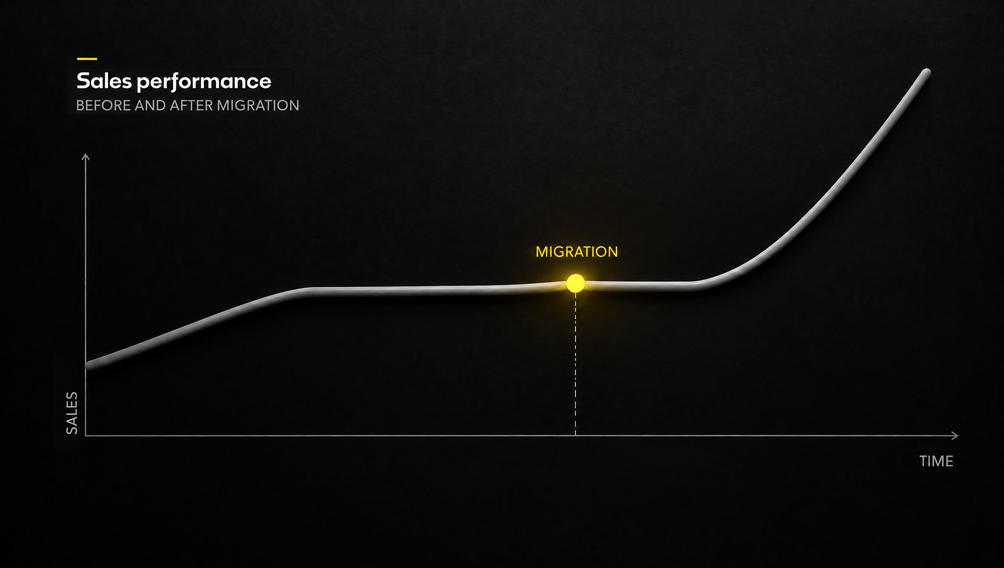
Planning an e-commerce store migration? Learn how to choose a cutover strategy (big-bang vs. strangler), minimize downtime, and monitor the first 72 hours post-launch to protect your sales and rankings.
12 min
Read more
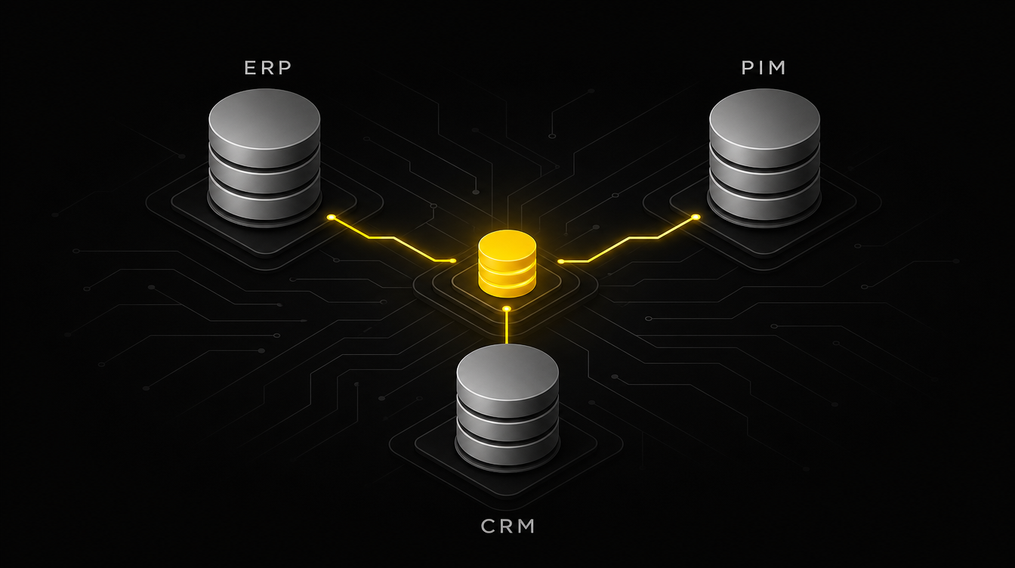
ERP, PIM, and CRM in Headless Architecture: How Integrations Drive Implementation Success in 2026
Picture running a large online store. Customers place orders, products ship out, inventory levels shift, and your marketing team plans new campaigns. For…
12 min
Read more