


Agentic Commerce: How to Prepare Your E-commerce Business for the Era of Autonomous AI Shopping?
Agentic Commerce is the upcoming revolution in e-commerce, where autonomous AI agents will make purchases on behalf of customers. To prepare your e-commerce business for this change, it is essential to structure product data, develop APIs, and implement a headless architecture. This transformation requires a strategic approach to ensure that your online store remains attractive to new, digitally savvy shoppers.


Imagine a world where customers don’t have to browse dozens of websites, compare products, or fill out purchase forms. Instead, they simply tell their AI assistant what they need, and it takes care of the rest. From finding the best deals, to comparing prices and reviews, to placing an order and tracking delivery—it all happens automatically. Agentic Commerce introduces a new type of buyer: the AI agent, which fundamentally changes the game in e-commerce.

What is Agentic Commerce, and why is it a game-changer?
Agentic Commerce is a concept in which artificial intelligence, in the form of autonomous agents, takes on the role of the buyer. We’re not talking about yet another chatbot recommending products, but about a system that actually handles the entire purchasing process for the user. Instead of manually searching for running shoes, a customer can tell the agent:
“Find me running shoes for up to 600 PLN, suitable for flat feet, with delivery by Friday.”
The agent searches stores, analyzes reviews, compares offers, and finalizes the transaction using tokenized payment methods.
This change is structural in nature. Previous waves of e-commerce technology, such as websites, mobile commerce, and social commerce, merely added a new sales channel. Agentic Commerce introduces something entirely new—the autonomous shopper. It will be AI agents, not humans, who make purchasing decisions based on established preferences and rules. For online store owners, this means they must adapt to ensure their products are accessible and appealing to these new, digital customers. You can find out more about the role of AI in the industry in the article: AI in e-commerce. Why is artificial intelligence a must-have for business?
How do autonomous shopping agents impact e-commerce?
The advent of Agentic Commerce will affect many areas of online retail operations, driving adaptation and innovation. Preparing for this era is an investment in the future of your business.
Product discovery and AI engagement
Traditional SEO (Search Engine Optimization) and product pages designed for the human eye will lose their significance. In the world of Agentic Commerce, structured data that AI can easily process will be what matters. When an agent asks: “What running shoes do you have under 600 PLN with good arch support in size 44?”, the answer must come from machine-readable data, not text descriptions. This means a strategic focus on detailed metadata, current inventory levels, and precise product specifications.
Customer loyalty and hyper-personalization
AI agents will learn user preferences with every transaction. After a few coffee orders, the agent will know the preferred roast, price limit, and consumption rate. This leads to hyper-personalization and predictive ordering—the agent will order products before the customer even thinks about running out. Traditional loyalty programs (points, coupons) may become less effective if the customer never visits the app. The key will be building layers of customer context, accessible via API, so that agents can use them.
E-commerce platforms and payment protocols
The current e-commerce infrastructure was built with the human user clicking through pages in mind. Agents need structured transaction endpoints (APIs) where they can check availability, prices, and finalize purchases with a single call. Dynamic pricing, real-time inventory awareness, and machine-readable return policies will become the standard. Protocols such as UCP (Universal Commerce Protocol) and ACP (Agentic Commerce Protocol) will soon become standard, natively supported by platforms like Shopify, Magento, and other e-commerce systems.
Payment systems will need to evolve to support tokenized transactions initiated by AI. Security will require verification not only of customers (KYC) but also of agents (KYA – Know Your Agent). At BeeCommerce, we understand the importance of robust application programming interfaces, which are the foundation of modern commerce. You can find more on this topic in our article: What is an API? Learn more about application programming interfaces.
Fulfillment and Returns in the AI Era
Agents will be able to automate order fulfillment decisions, negotiate return policies, and coordinate post-sale activities. If an agent purchased the wrong shoe size, they should be able to initiate a return, select a replacement, and schedule delivery without requiring customer intervention. This requires an agent-ready API for fulfillment systems and integration with last-mile logistics. It is a step toward the complete automation of post-sale processes.
Checklist: How to Prepare Your Store for the Age of Agentic Commerce?
Preparing your store for the age of Agentic Commerce is a strategic investment that will give you a competitive edge. Here are the key steps recommended by the BeeCommerce team:
Product Data Audit and Structuring:Move from descriptions for humans to data for AI. Ensure your product data is rich in detailed metadata, machine-readable specifications, and compliant with standards such as schema.org. This is the foundation for any AI agent that will be searching for specific information.
API development and optimization: Ensure your e-commerce platform has robust and efficient APIs that allow AI agents to access information about products, prices, and inventory levels, and enable order fulfillment and returns management. Headless eCommerce is an architecture that naturally supports this approach, offering flexibility and scalability.
Implementing Headless Commerce Architecture:Separating the frontend (presentation) layer from the backend (data and business logic) is crucial. This allows for the flexible delivery of content and data to various channels, including AI agents, without the need to rebuild the entire system. The BeeCommerce team has strong expertise in this area. We encourage you to read our guide: Headless Technology: A 5-Minute Explanation.
Structured Content and Data Management:Regardless of the platform you choose, it is crucial that your content and product data are structured and easily accessible via API. A headless CMS, such as Storyblok—in which BeeCommerce has top expertise in Poland—is an excellent tool for centralizing and managing this data. It enables marketers to effectively create and edit content while providing machine-readable data for AI agents and other channels. You can read more about the benefits of this solution in the article: What is Storyblok? A simple guide to headless CMS for e-commerce and beyond.
Invest in advanced analytics and AI: Monitor how AI agents interact with your store. Use tools like GA4 with server-side tracking to track this behavior. Consider prototyping your own AI solutions to help with product management, offer personalization, and process automation. Our experience with e-commerce projects shows that AI is now a must-have for business: AI in e-commerce. Why is artificial intelligence a must-have for business?.
The Rise of Hyper-Personalization: Build advanced personalization mechanisms that take into account historical purchase data, preferences, and customer behavior. AI agents will use this information to make informed product selections, increasing the likelihood of conversion.
Content Management and Compliance: Ensure your content is consistent and easy for AI to understand, while also meeting legal requirements and quality standards. Content Governance: How to Reclaim Your Team’s Time and Unlock Content Marketing? is the key to maintaining order in your content and ensuring its accessibility for every type of audience, including AI agents.
Optimizing Developer Experience:Ensuring that your development team has the tools and processes to work effectively on APIs and headless architecture is crucial. Developer Experience is Your Store’s Hidden ROI: Why Does a Happy Developer Earn You More? highlights the importance of this investment.
Summary: BeeCommerce and the Future of Agentic Commerce
Agentic Commerce is not a distant future but a rapidly growing trend that will soon define how e-commerce operates. Preparing for this change requires a strategic approach and investment in the right technologies.
Key takeaways for your business:
AI agents are the new buyers: Instead of humans, algorithms will make purchasing decisions, which requires a shift in perspective in your sales strategy.
Data is the fuel for AI: Structured, machine-readable product data is essential for agents to operate effectively.
API-first and Headless Commerce are the foundation: Flexible architecture enables easy integration with AI agents and adaptation to new protocols, such as UCP and ACP.
Structured content management supports AI: Tools such as Headless CMS (e.g., Storyblok) provide control over content for both humans and AI.
Analytics and AI are a competitive advantage: Monitoring agent behavior and prototyping AI solutions is key to optimization and growth.
Don’t let your e-commerce business fall behind. The BeeCommerce team specializes in building modern e-commerce solutions using headless architecture, advanced web analytics, and rapid AI prototyping. We’re ready to help you prepare for the era of Agentic Commerce and turn challenges into opportunities for growth.


Let's talk about potential areas of collaboration!
Hi!
during the first consultation we'll analyze your goals through the lens of ROI and operational risk. Whether we're building an Enterprise system, an application, or an AI automation — together we'll plan an architecture that eliminates your technical debt and unlocks scalability.


You can find more articles on this topic on our blog
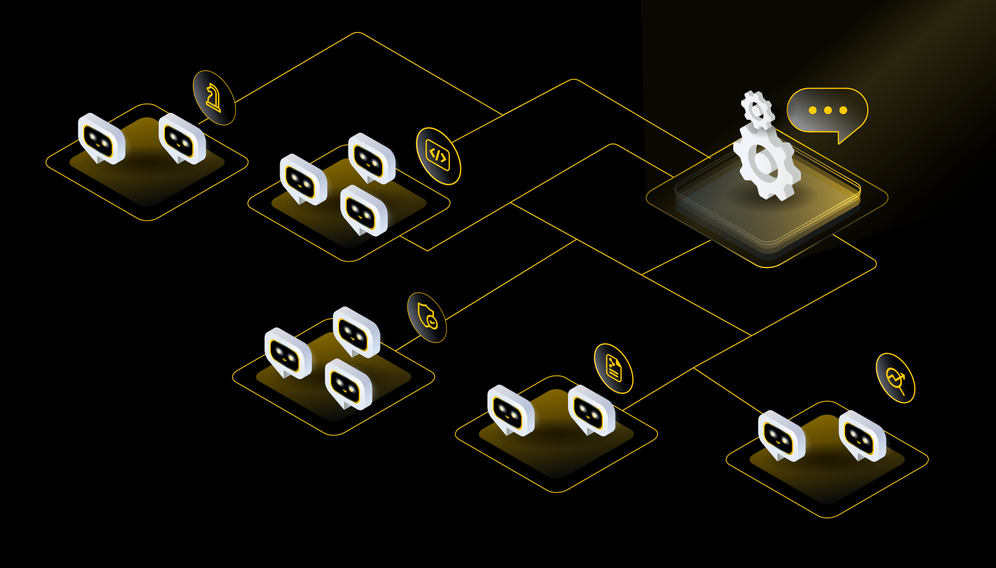
12 AI agents, 5 layers, no recruitment | BeeCommerce
How we built an AI development team of 12 AI agents that supports a software house at every stage of the process: from analyzing new ideas and planning the architecture, through development, code review, testing, and security, all the way to SEO, analytics, and deployment on Kubernetes—without recruitment, without onboarding, and without unnecessary operational overhead.
6 min
Read more
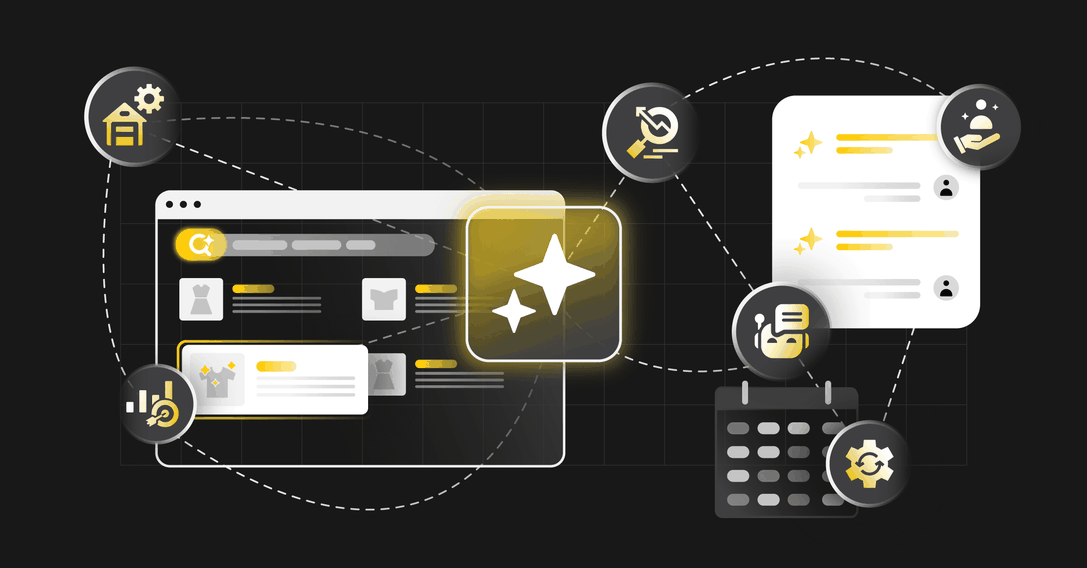
AI in e-commerce. Why is artificial intelligence a must-have for business?
AI is not just about commonly known chatbots. Artificial intelligence offers much more for business. Check out how applying AI to e-commerce will help you increase sales and grow your online store on other levels.
4 min
Read more
AI in field sales: how an AI assistant is reshaping the Rep's job and company results in 2026
Discover how an AI sales assistant automates reporting, optimizes routes, and boosts sales efficiency. Stop spending evenings updating your CRM.
10 min
Read more