
Headless CMS for Marketing 2026: E-commerce Guide
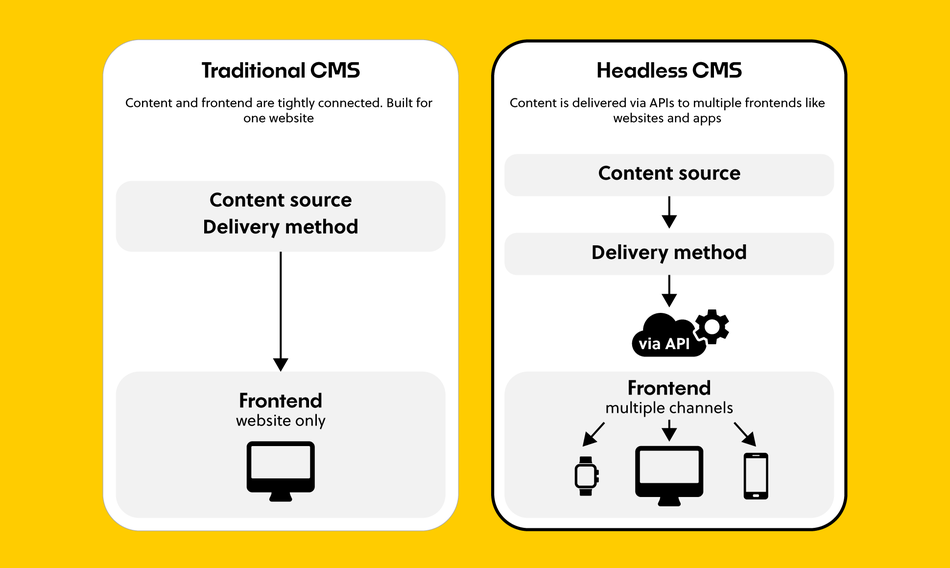
A headless CMS is a content management system that stores content as structured data and delivers it through APIs, fully separating the backend from any front-end presentation layer. This allows marketing teams to publish the same reusable content blocks instantly across websites, mobile apps, email campaigns, and AI assistants, without manual duplication. In 2026, as the e-commerce market demands lightning-fast responses and consistent communication, choosing the right CMS becomes a crucial business decision.
Traditional CMS systems, while serving as the foundation for many businesses over the years, often become a bottleneck. Their monolithic architecture, where content is inextricably linked to a specific page, prevents rapid adaptation to changing customer expectations and omnichannel requirements. E-commerce owners and marketing managers need solutions that not only accelerate publishing but also ensure brand consistency across every channel and genuinely translate into increased conversions and reduced operational costs.
A headless CMS is a content management system that stores content as structured data and delivers it through APIs, fully separating the backend from any front-end presentation layer. This allows marketing teams to publish the same reusable content blocks instantly across websites, mobile apps, email campaigns, and AI assistants, without manual duplication. In 2026, as the e-commerce market demands lightning-fast responses and consistent communication, choosing the right CMS becomes a crucial business decision.
Traditional CMS systems, while serving as the foundation for many businesses over the years, often become a bottleneck. Their monolithic architecture, where content is inextricably linked to a specific page, prevents rapid adaptation to changing customer expectations and omnichannel requirements. E-commerce owners and marketing managers need solutions that not only accelerate publishing but also ensure brand consistency across every channel and genuinely translate into increased conversions and reduced operational costs.


Traditional CMS – Barriers to Your E-commerce Growth
Imagine launching a new promotion. In a traditional CMS, you would manually update headlines, images, and calls-to-action (CTAs) on the homepage, product pages, email templates, and app banners. This means a dozen separate edits for a single change, leading to unavoidable content duplication and the risk of inconsistency. Such a process can turn a 10-minute update into a full-day task, directly impacting campaign speed and potential revenue loss.
Content duplication issues also negatively affect Search Engine Optimization (SEO). Search engines may flag duplicated material, and canonical signals become fragile, weakening your site's SEO authority. Furthermore, traditional platforms often suffer from performance problems. The proliferation of plugins and page builders, while seemingly convenient at first, eventually slows down your site. This results in poorer Core Web Vitals scores, such as Largest Contentful Paint (LCP) and Interaction to Next Paint (INP), directly leading to lower search rankings, higher bounce rates, and conversion loss. Frontend optimization is crucial for today's e-commerce, and we help improve it through auditing and bottleneck elimination.
Additionally, working with a traditional CMS often creates team bottlenecks. Marketers have to wait for developers to implement even simple layout changes, delaying campaigns and A/B tests. This generates what is known as technical debt, which accumulates over time, increasing maintenance costs and hindering innovation. The lack of flexibility in content management also complicates expansion into new markets and managing multilingual store versions, leading to inconsistencies and additional burdens.
Headless CMS – The Foundation of Modern Digital Marketing
Headless CMS fundamentally changes the approach to content management. Instead of treating content as an integral part of a page, it breaks it down into modular, structured elements: titles, descriptions, CTAs, images, metadata. All these elements are defined once in a flexible content model. This means a marketing manager creates a product promotion just once, and the same content block can power the website, app notification, email subject line, and AI chatbot response, without copying or reformatting.
The main business benefits of implementing a Headless CMS include:

Omnichannel in Practice
The same structured content can be delivered anywhere through simple API calls (Application Programming Interface, a way systems communicate). Websites, mobile apps, email platforms, IoT displays, voice assistants, and generative AI tools – all fetch content from a single central source. When the marketing team updates a campaign offer, every customer touchpoint modifies instantly.

Unrivaled Speed and Performance:
Marketers are no longer trapped in the CMS's outdated templating system. Developers can build the front-end layer (what the user sees) using any modern framework, such as Next.js or React, while editors work in an intuitive interface. This translates into lightning-fast loading pages, excellent Core Web Vitals scores, and design freedom without developer blockages.

Scalability and Flexibility:
Headless CMS perfectly supports a Composable Commerce strategy, where you can choose the best tools for each task, free from vendor lock-in. Headless architecture eliminates dependencies between teams, allowing developers and marketers to work in parallel. Campaigns launch faster because teams no longer block each other, significantly reducing time-to-market for products and promotions.

Improved SEO:
A properly implemented headless system is one of the most powerful ways to improve search visibility. It delivers faster page loads, better Core Web Vitals, and clean, structured data that search engines love. As a result, marketers consistently observe higher organic traffic.
Is your e-commerce holding back your growth?
See how our enterprise-class solutions eliminate technical debt and boost conversion rates!
How to Choose the Ideal Headless CMS for Your Business?
Choosing the right Headless CMS is a strategic decision that should be dictated by your business's real needs, not just a passing trend. It's crucial to match the tool to your team size, content complexity, and growth plans.
Consider the following questions to make an informed decision:
How many editors work in your CMS? If you have 5 or more editors who need to work simultaneously without blocking each other, headless is ideal.
How complex is your editorial workflow? Multi-stage approvals, content localization for different markets (check our Multilingual CMS solutions), or compliance checks are areas where headless excels.
Will content be reused across channels? If the same assets must appear on your website, app, emails, and AI assistants, headless is essential.
How important are performance and SEO to you? If Core Web Vitals, fast global content delivery, and structured data for search engines are critical, headless is the best option.
If you answer "yes" to three or more questions, a headless CMS architecture is almost certainly the right move for your team. Otherwise, a traditional or hybrid CMS might suffice for small sites (under 20 pages), projects with a single editor, or without omnichannel requirements.
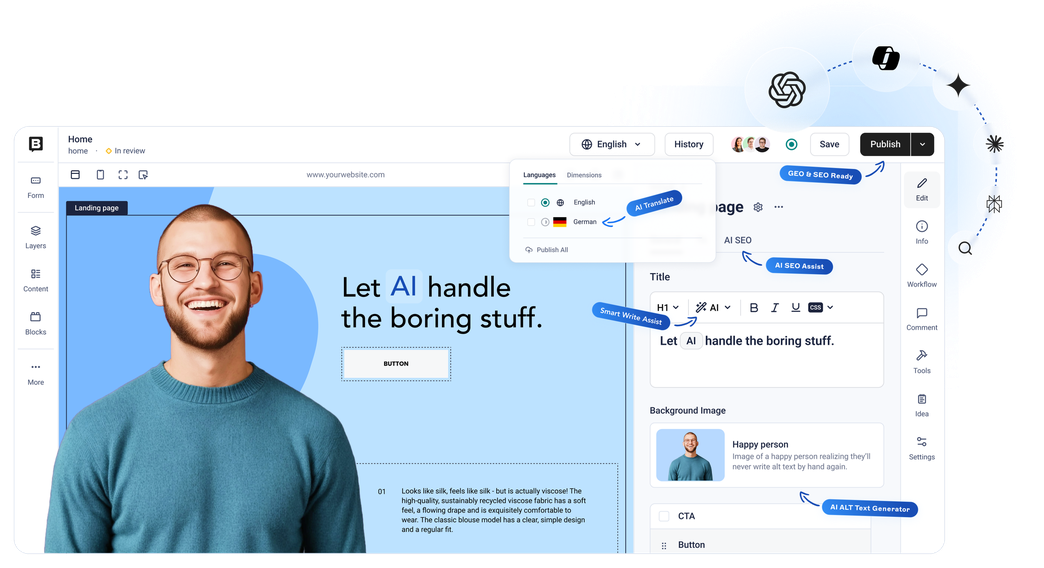
At BeeCommerce, we recommend Storyblok Headless CMS as one of the best for marketing teams. Its visual editor allows editors to see and change content exactly where it appears live, dramatically speeding up campaigns and reducing the need for developer involvement. Our expertise in Storyblok enables fast and efficient implementations. Other platforms worth considering include Sanity (for flexible content modeling) or Contentful (for large organizations with high governance and compliance requirements).
Investing in Headless CMS – Costs and ROI
The question of cost is always critical for e-commerce owners and managers. Headless CMS is not the cheapest option upfront, but it almost always becomes the most cost-effective as campaigns scale, teams grow, and performance becomes a real business driver.
Licensing and API Costs:
Headless platforms use different pricing models – from user-based fees, through API usage fees, to custom enterprise plans. For example, Storyblok offers plans for mid-sized teams that scale with needs. It is crucial to understand that the cost of a platform is not just its initial price, but also the cost of its implementation, development, and team adoption.
Implementation and Development Costs:
This is an area often underestimated. Headless CMS requires an initial investment in:
Content modeling and studio configuration: 4-8 weeks of specialist time.
Front-end development (Next.js/React): 6-12 weeks.
Integrations (CRM, analytics, personalization): 2-6 weeks.
The total implementation cost can range from tens of thousands to over a hundred thousand PLN, depending on project complexity. However, once the system is built, content changes no longer require developer involvement for every campaign update.
Maintenance Costs
are as a Service (SaaS) headless CMS platforms relieve you of many burdens. Automatic updates, security patches, and scaling are included in the price. You don't have to worry about server management or plugin conflicts. Open-source options (e.g., Strapi) might seem cheaper, but they transfer maintenance costs to your team or agency, often leading to additional expenses for DevOps and security.
Hidden Costs of the Wrong Choice:
The most expensive mistake is needing to re-migrate within 18-24 months because the platform cannot keep up with growth. Choosing the wrong CMS can lead to:
Rewriting front-end code.
Loss of SEO rankings during CMS migration.
Months of lost campaign velocity while the new team learns the new tool.
Choosing the right headless CMS architecture from the start, based on your editor count, channel needs, and growth plans, typically pays for itself within 12-18 months through faster campaigns and better performance. Additionally, such solutions open the door to process automation and AI content generation, further boosting ROI. Our expertise in advanced web analytics can help measure these gains.
Summary
Headless CMS is the future of content management in e-commerce and marketing. It offers the flexibility, speed, and scalability necessary for success in the dynamic digital environment of 2026.
Key takeaways:
Traditional CMS often hinder business growth through content duplication, performance issues, and team bottlenecks.
Headless CMS separates content from the presentation layer, enabling omnichannel distribution, better SEO, and faster marketing campaigns.
Choosing the right Headless CMS depends on your team's needs, content complexity, and growth plans. Storyblok is an excellent option for marketing teams due to its visual editor.
While the initial investment in Headless CMS may be higher, long-term benefits in increased conversion, lower operational costs, and better SEO provide a high return on investment.
Avoid common mistakes, such as over-engineered content models or insufficient editor training, to fully leverage headless potential.
Are you wondering if a Headless CMS is the right solution for you? Do you want to learn how BeeCommerce can help your company with digital transformation and achieve measurable business benefits? Contact us to discuss your needs and find the optimal solution.


Let's talk about potential areas of collaboration!
Hi!
during the first consultation we'll analyze your goals through the lens of ROI and operational risk. Whether we're building an Enterprise system, an application, or an AI automation — together we'll plan an architecture that eliminates your technical debt and unlocks scalability.


Read more about headless CMS
Content Governance: How to Reclaim Your Team's Time and Unleash Content Marketing?
Implement effective content marketing and relieve your developers. Discover how content planning and Content Governance build organizational order in e-commerce.
4 min
Read more
Storyblok vs Strapi — Headless CMS Comparison
Storyblok vs. Strapi. See which headless CMS is better for your e-commerce business. Find out which content management system to choose.
7 min
Read more
What is Storyblok? A simple guide to headless CMS for e-commerce and beyond
Storyblok is an effective tool for creating and managing website content. Read this post and learn how this intuitive headless CMS will impact your business growth.
5 min
Read more