




The Backend Iceberg: Why Your E-commerce Is Sinking Even When Everything Looks OK on the Surface
In digital commerce, there is an unwritten rule: what the customer sees is only a fraction of the truth regarding the health of the business. Many e-commerce companies resemble luxury liners—featuring a beautiful interface (frontend), a fast cart, and polished graphics. However, below the waterline, within the invisible backend structures, a dramatic struggle for survival often takes place. This struggle exists on several levels, which we collectively call the Backend Iceberg.
In this article, we will perform an "autopsy" of your system: from tangled processes and the team's cognitive debt to financial errors and security corrosion. We will show why the true cost of a legacy system doesn't lie in server invoices, but in what happens deep beneath the surface, and how Beecommerce can help you melt this metaphorical glacier. E-commerce in Poland is becoming increasingly demanding, so your technology must keep pace with the market.
Listen to the audio version of this article.

The Tip (What’s Visible): "Just one simple feature"
Above the water, life seems simple. A business strategy might involve, for instance, adding a new pickup point or an additional payment method—processes that appear uncomplicated and hassle-free at first glance. From a business perspective, it’s "just a button," but when developers respond that it will take two weeks, frustration sets in.
Business Perspective: Frustration over delays and the impression that IT is "blocking" growth.
Technical Reality: Every attempt to touch the "tip" shifts a massive amount of technological debt hidden beneath the water.
Layer 1 (Processes): Integration Spaghetti
Ask yourself these questions:
Does your team have to manually "straighten out" order data because the ERP integration regularly fails?
Is implementing a new courier or payment method a matter of simple configuration, or weeks of "carving" through the code?
How often do developers spend their time checking why stock levels in the store don't match reality instead of building new features?
Layer 2 (People): Cognitive debt and decision paralysis in e-commerce
The deeper we go, the more we touch upon the human factor. Systems built over many years generate what is known as cognitive debt. In an era where AI plays an ever-growing role, knowledge automation becomes crucial to avoid losing one's bearings in a thicket of legacy code.
Deep Down: Understanding the system's logic becomes a challenge that exceeds the capabilities of a new employee. Vital knowledge resides only in the heads of one or two senior developers.
Business Impact: The company becomes a hostage to its own code. The fear of key personnel leaving paralyzes any decisions regarding modernization.
Consider these questions:
Would the departure of one key programmer result in your company's store development being paralyzed for weeks?
Does onboarding a new person to the IT team take months because "no one actually knows how this was written"?
How often do you hear from your team that "it's better not to touch this because it might fall apart," even though the change is business-justified?
Layer 3 (Finance): Silent errors and margin erosion
This is the layer that hits the wallet the hardest, even though it rarely appears in error logs as a critical failure. Every unplanned expense drains the budget originally intended for growth.
Deep Down: Synchronization mechanisms based on cyclic file polling or CSV processing cannot keep up with real-time sales.
Business Impact: Selling "phantom" stock, incurring logistical costs for returns, and wasting hundreds of accounting hours on issuing corrective invoices. Often, it is the modern sales channel—which should be the most efficient—that suffers the most.
Tech-Translator: Race Conditions
This is a data "race" scenario. A customer buys the last item, but because of synchronization delays, the system isn't aware of it yet and allows another purchase. The result? You have two orders and only one product in the warehouse.
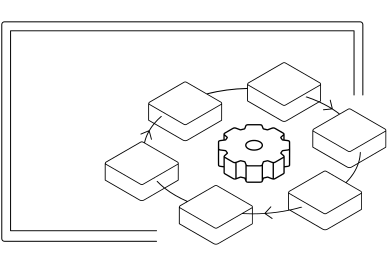
Layer 4 (Security and Privacy): Underwater corrosion
Deep beneath the surface, the system is rusting. This is the most dangerous zone because it is completely invisible... until the moment customer trust is irreparably damaged by a critical failure or a data breach.
Deep Down: A general fear of updating system components (from PHP versions to external libraries) or a reluctance to allocate funds for maintenance means the store is running on a leaky foundation.
Business Impact: Increasing vulnerability to attacks and the risk of heavy financial penalties (GDPR). With each passing year, the gap between your system and modern security standards grows wider.
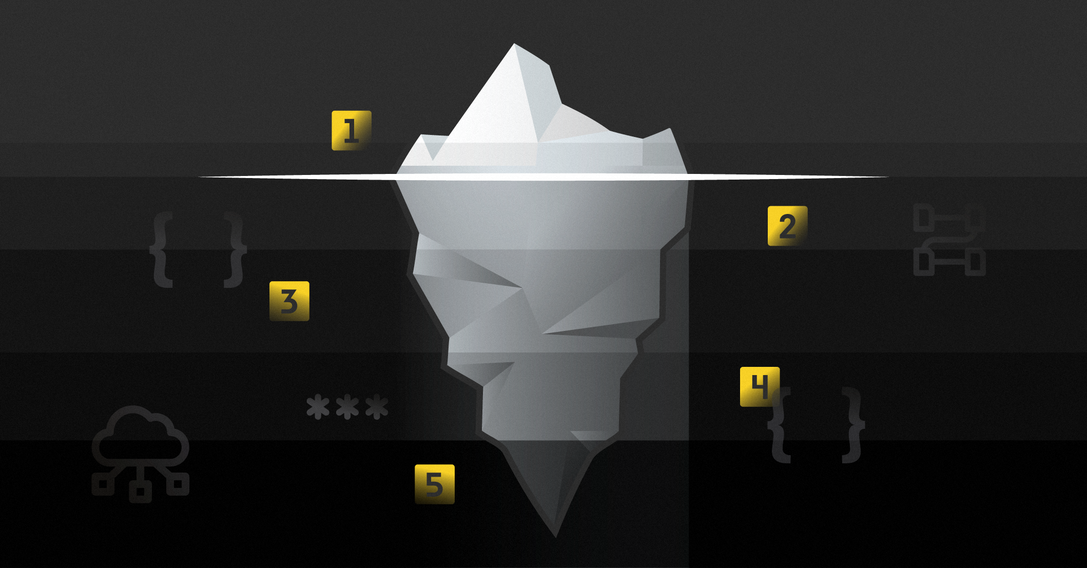
Layer 5 (Culture): Technology & Developers as "Database Guardians"
At the very bottom of the iceberg lies the foundation of every change: the team's mentality. This is a critical prerequisite for ultimate success, as we highlighted in our recent article on Developer Experience (DX). In a healthy company, developers are innovators; but when the backend falters, both they and the end consumer suffer, resulting in delayed product delivery.
In the shadow of the backend iceberg, the programmer's role is degraded to that of a "database guardian." Instead of building new solutions, their daily life consists of firefighting, and every deployment becomes a source of stress. A lack of proper test coverage means that implementing a new feature feels like walking on thin ice.
Tech-Fact: The Bus Factor
Have you ever heard of the "Bus Factor"? It’s a metric that determines how many team members would need to be "hit by a bus" for a project to grind to a halt. In legacy systems, this factor is often as low as 1. Modernizing your backend allows you to distribute this knowledge and increase your company's resilience.
How do we melt the Backend Iceberg at Beecommerce?
Instead of patching holes in a rusting ship, we propose an architectural shift that will leave your competition behind. What do we offer?
| What are we offering? | Our process |
|---|---|
| Predictability (Testing) | The right antidote to the fear of change is software testing. We implement rigorous standards where every change is automatically verified. Proper code delivery is a guarantee of peace of mind. |
| Data Flow Optimization | We organize communication between systems (PIM, ERP, Warehouse). We focus on real-time data, eliminating synchronization errors and saving your accounting department hours of work. |
| Unleashing Potential (Headless) | We decouple the frontend from the backend. Developers work on a modern stack (Next.js, Tailwind) without risking the stability of the system’s core. |
How Will Your Business Benefit?
Investing in a modern backend means regaining control. You reclaim:
Agility: You deploy new features without the fear of regression.
Security: Your foundations are regularly updated.
Profitability: No more costs associated with handling "silent errors."
Innovation Culture: Programmers build solutions that actually increase conversion.
If you feel like your IT team is constantly fighting the technology instead of delivering value, it’s time to fix it.


Let's talk about potential areas of collaboration!
Hi!
during the first consultation we'll analyze your goals through the lens of ROI and operational risk. Whether we're building an Enterprise system, an application, or an AI automation — together we'll plan an architecture that eliminates your technical debt and unlocks scalability.


You can find more articles on this topic on our blog
Magento vs. Medusa: Which Platform Is Better for Your E-commerce Business?
We compare Magento and Medusa to help you choose the ideal e-commerce platform. See which CMS is better for your online store.
5 min
Read more
API: Application Programming Interface in Practice
Discover what an API (Application Programming Interface) is and how it facilitates seamless integration and communication between various software and applications.
9 min
Read more
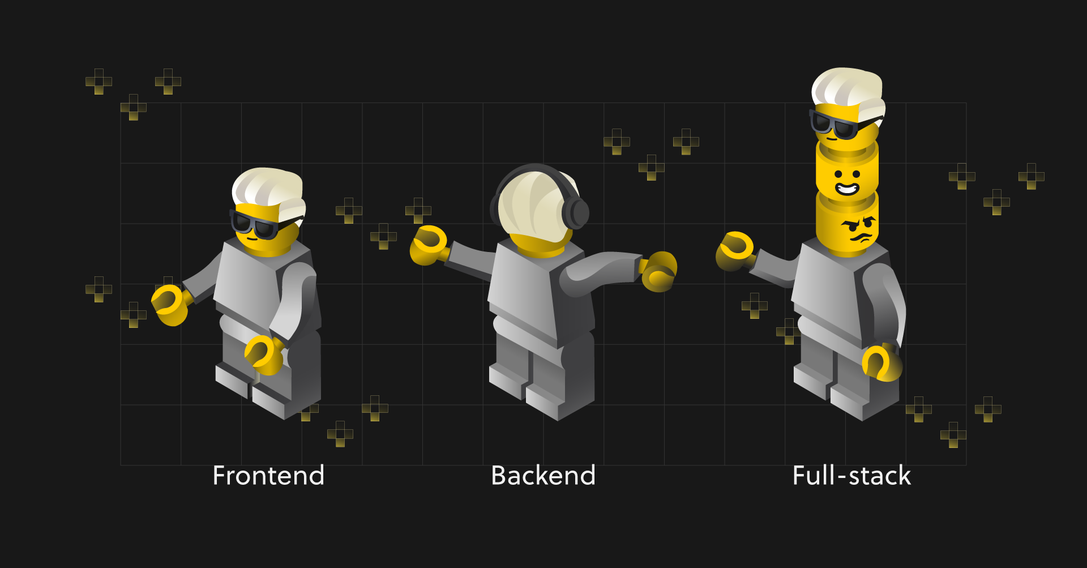
Frontend vs Backend Development - Differences and Similarities
Every programmer has to make this decision at some point. If you're wondering what frontend and backend are, what similarities and differences exist between them, and what a specialist in each of these fields does—be sure to check out this article.
5 min
Read more