



Developer Experience is your shop’s hidden ROI: Why does a happy developer earn you more?
In modern e-commerce, it has become widely accepted that investing in technology is a “necessary evil” – an expensive foundation that is simply expected to work. However, the market reality in 2026 brutally challenges this approach: a high-quality developer experience is the simplest way to reduce Time-to-Market and achieve real growth in the profitability of the entire business.
When your dev team has tools that doesn't frustrate, your business becomes agile in a way that competitors trapped in legacy systems can only dream of.
Listen to the audio version of this article.

Monolithic hell vs. the modern stack: The anatomy of e-commerce chaos
Imagine an e-commerce manager caught in the crossfire between a board demanding results and an IT department that’s hitting a brick wall. Developers respond to every request for change with a heavy sigh or yet another warning about the risk of a system crash. The thing is, the problem rarely lies in staff's lack of willingness or competence.
The real culprit is the “monolithic nightmare” – an outdated, rigid system where changing the colour of a button or adding a simple marketing banner risks completely paralysing the shopping basket.
In such an environment, every marketing campaign becomes a high-risk operation. If banners are in the wrong format, descriptions contain errors, and links lead nowhere, developers have to abandon their planned work to “manually” fix the databases. This is a classic bottleneck that stifles creativity and generates a massive technical debt.
The pain for the business is therefore clear: deployment cycles drag on for weeks, and the fear of updating paralyses development. For a programmer, working with such code is a daily struggle with a system that, rather than inspiring innovation, leads to burnout.
The stack that developers love
Why this is crucial to the company
When your developer asks to implement modern solutions such as Next.js, Tailwind CSS or the Vercel ecosystem, it is almost never to chase technological trends. These tools are the foundation of high DX, which directly translates into financial results.
Next.js: Currently the standard in building fast front-ends. It allows for instant page rendering, which is crucial for SEO and positioning, and a faster website means a lower bounce rate and a real increase in conversion across all sales channels.
Tailwind CSS: Accelerates the building of user interfaces (UI) by using ready-made, secure ‘building blocks’. This means that developers do not have to write thousands of lines of CSS code from scratch. This drastically reduces the time needed to create a new component.
Storyblok: Intuitive content management that gives marketing teams freedom, whilst offering developers invaluable “peace of mind” by sparing them the hassle of correcting typos or other minor errors that, above all, disrupt their workflow.
Turborepo (from Vercel): This is a tool that developers value for its incredible speed. It reduces the time taken to build and test applications through intelligent management of background processes. In practice, this means that a fix requested in the morning can go live before lunch, without the risk of anything ‘breaking’ along the way.
It is worth noting here that platforms such as Vercel offer a multitude of tools to support the process of continuous implementation of changes. High DX means that technology is no longer a brake, but an accelerator of marketing activities.
Is your e-commerce holding back your growth?
See how our enterprise-class solutions eliminate technical debt and boost conversion rates!
AI-Assisted Coding: A Safe Boost to Development Processes
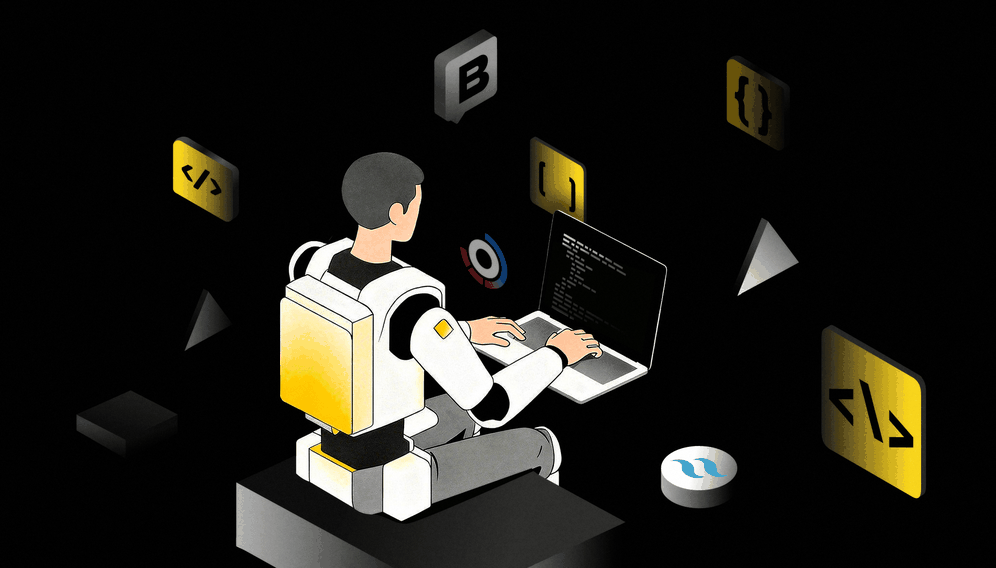
A modern approach to DX in 2026 is inconceivable without the support of artificial intelligence. Tools such as GitHub Copilot and advanced AI-assisted coding systems now serve as a kind of ‘exoskeleton’ for every specialist. The synergy between human and machine enables:
Accelerating component development: AI handles repetitive, tedious code structure, allowing the developer to focus on the unique business logic of your shop.
Enhancing security: AI tools help identify potential errors and edge cases as early as the coding stage, before any bug reaches the production server.
Real time savings: Tasks that used to take a whole working day can now be completed in a few hours. Even if the developer still has to correct fragments generated by AI, the overall speed of feature delivery increases exponentially.
Implementing orderly governance in this area is not just a technical matter; it is strategic human resource management that enables the team to produce more value with less effort.
For those interested: Take a look at the article on Content Governance, i.e. how to start implementing such governance, and how it can also streamline work in the marketing sphere.
Technology ready for tomorrow: DX as your insurance policy
Investing in Developer Experience also means building a system that stands the test of time – in other words, future-proofing. A modern, clean tech stack ensures that:
Scaling is painless: Adding new payment methods or integrating with a loyalty scheme doesn’t require a complete overhaul of the shop’s infrastructure.
The code speaks for itself: Good documentation and standards (such as those in Next.js) drastically reduce the cost of entry for new developers.
You eliminate risk: Even if a key developer leaves the team, high DX ensures that a new specialist can take over the project without months of onboarding.
It’s a strategic policy that protects your business from technological obsolescence and allows you to adapt, without stress, to innovations that will appear on the market in a year, two, or five.
How to explain this to the Board? Arguments for ROI with DX
An e-commerce manager must be able to translate technical enthusiasm into the language of hard data. Here's how to sell an investment in DX:
| Argument | Impact on profit |
|---|---|
| Lower staff turnover | Recruiting and onboarding a new developer is a huge expense. A team working on a modern stack (e.g. Storyblok + Next.js) is loyal because they feel that they are developing their professional careers, not just putting out fires. |
| Velocity of Change | High DX means the ability to react instantly to competitors’ moves. If marketing needs a new landing page, a modular system allows it to be launched in 15 minutes, not 3 days. |
| Fewer bugs = greater peace of mind | Predictable, modern code means fewer outages during sales peaks, such as Black Friday. |
| Better team morale | A happy developer is a creative developer. Instead of wasting energy fighting the system, your team can actively propose solutions that will attract customers and increase the number of leads. |
Technology as the exoskeleton of marketing
It is worth emphasising that investing in Developer Experience is not about ‘pampering’ developers or giving in to their whims. It is about building an efficient machine in which technology is not a barrier, but a tool that unleashes the creativity of the entire marketing department. When developers stop struggling with code and outdated processes, they begin to deliver the real business value that management expects – faster, cheaper and more securely.
So, by choosing modern tools and taking care of DX, you build a competitive advantage that cannot be easily copied. In essence, it is an investment in invaluable ‘peace of mind’ that pays off with every new implementation and every trouble-free campaign.


Let's talk about potential areas of collaboration!
Hi!
during the first consultation we'll analyze your goals through the lens of ROI and operational risk. Whether we're building an Enterprise system, an application, or an AI automation — together we'll plan an architecture that eliminates your technical debt and unlocks scalability.


You can find more articles on this topic on our blog

Frontend as a Service: No-Code, Low-Code, or High-Code?
No-Code, Low-Code, or High-Code – which solution will be best for your application?
8 min
Read more

The Latest Trends in Web Design: A Look into the Future of the Internet
Trends in Design. How to design websites in 2023. Which web design trend is right for you.
5 min
Read more
Small Changes, Big Gains: 6 Strategic Implementations for Your Business
Discover the strategies that will increase your business's profits. Learn how small investments impact financial performance and sustainable growth in the e-commerce sector.
7 min
Read more