



Onboarding New Loyalty Rewards Program: From Weeks to Days
Multi-Tenant Benefits Platform for Pluxee on Vue Storefront. See how the core + theme architecture sped up onboarding for new employers.
visit Pluxee website


About the Project
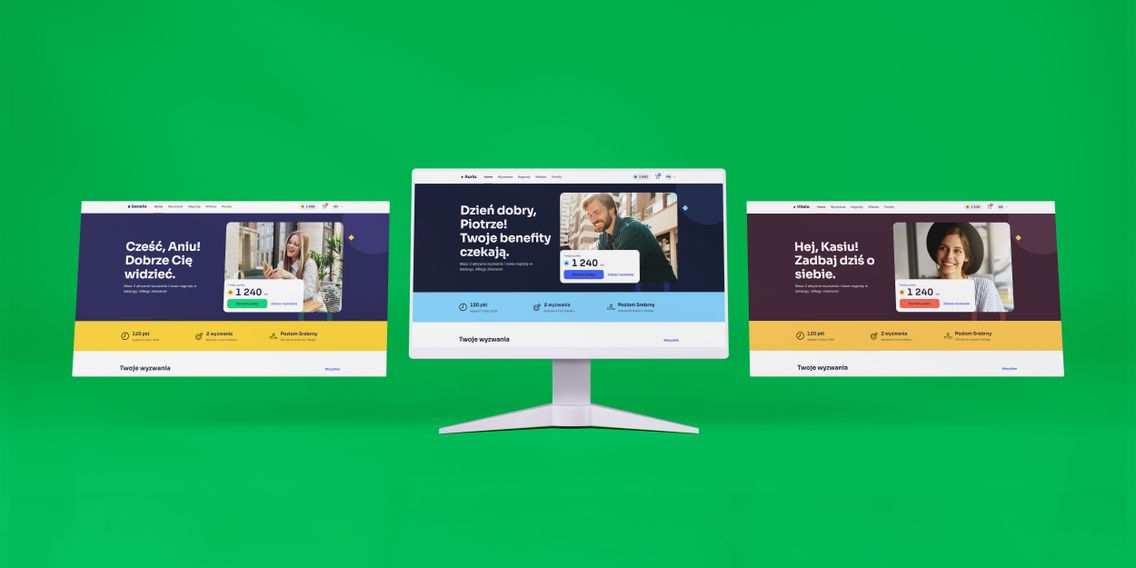
Sodexo Benefits and Rewards Services Poland is one of the market leaders in employee benefits in Poland. Their business model rests on a simple principle: every company using their platform gets its own employee portal, complete with the employer's logo, dedicated sets of rewards and tasks, its own page layout, and often its own color branding. The problem shows up at scale. Dozens of corporate clients, each with their own portal, and every new rollout potentially means weeks of frontend work. Sodexo needed an architecture that would flip that equation, so the cost of onboarding the next employer wouldn't scale linearly with the number of employers.
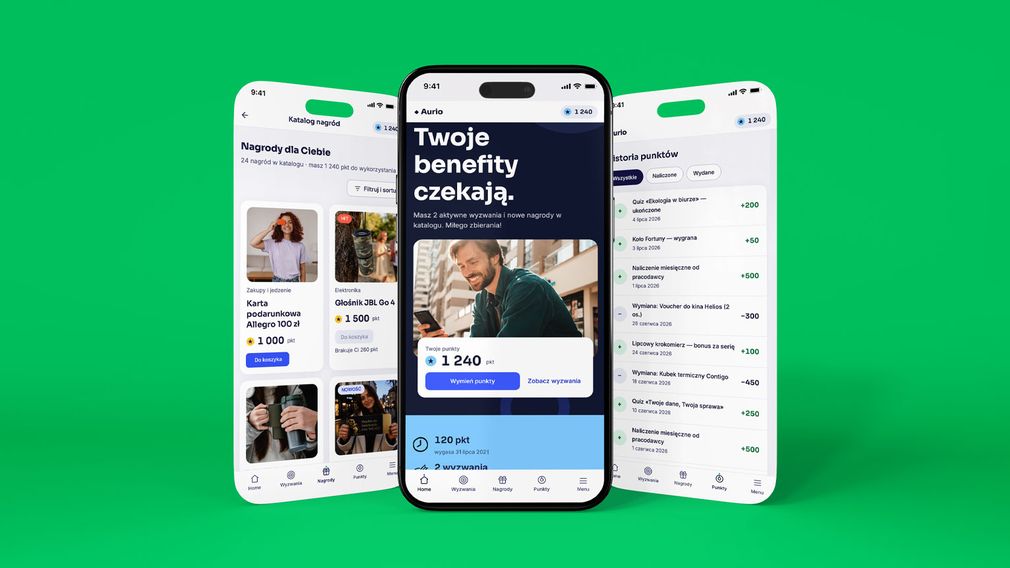
We built a multi-tenant headless web app on Vue Storefront using a core + theme architecture, cutting new employer onboarding from weeks to days. We delivered the main implementation in 2022, then supported platform development through a maintenance phase in 2023–2024. Sodexo came away with a stable growth engine, empowered to independently continue the technical work of onboarding new tenants.
The Sodexo Ecosystem: Days Instead of Weeks, Predictable Scale
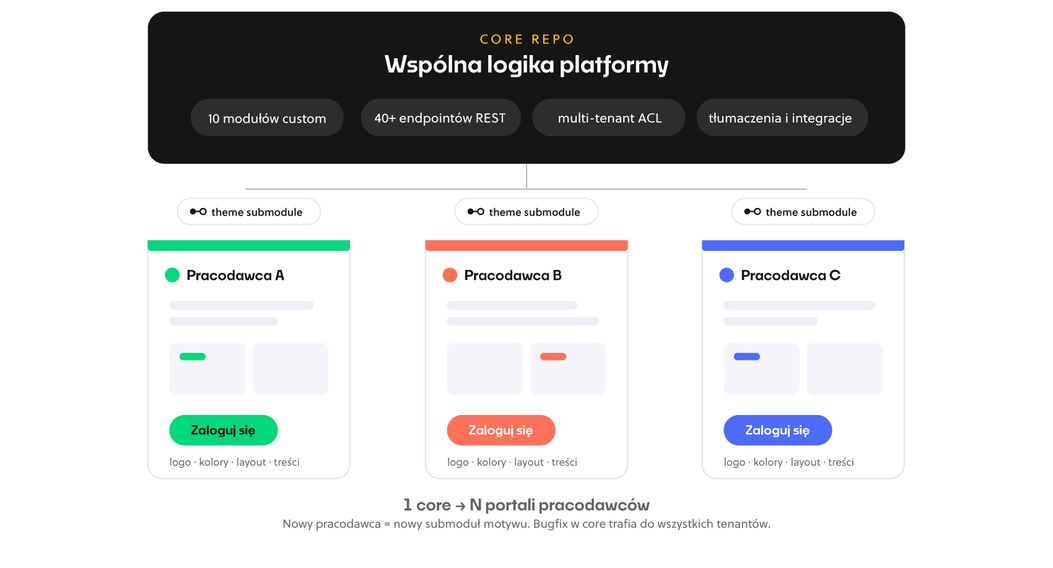
With the core + theme architecture, every bugfix and new feature in the core rolls out automatically to all tenants, with no extra per-employer work required.
8 months
Total rollout time for the new platform: documentation, implementation, testing.
40+
REST API endpoints, integrated, documented, and tested individually for the multi-tenant environment..
10
Custom modules built from scratch outside the Vue Storefront standard, including Challenge, Points, ACL, and Declaration.
1 → N
One core repo powers every tenant. A new employer means a theme submodule, not a new project.
Is Scaling Costing You More and More?
Book a call and find out if a multi-tenant approach fits your business model.
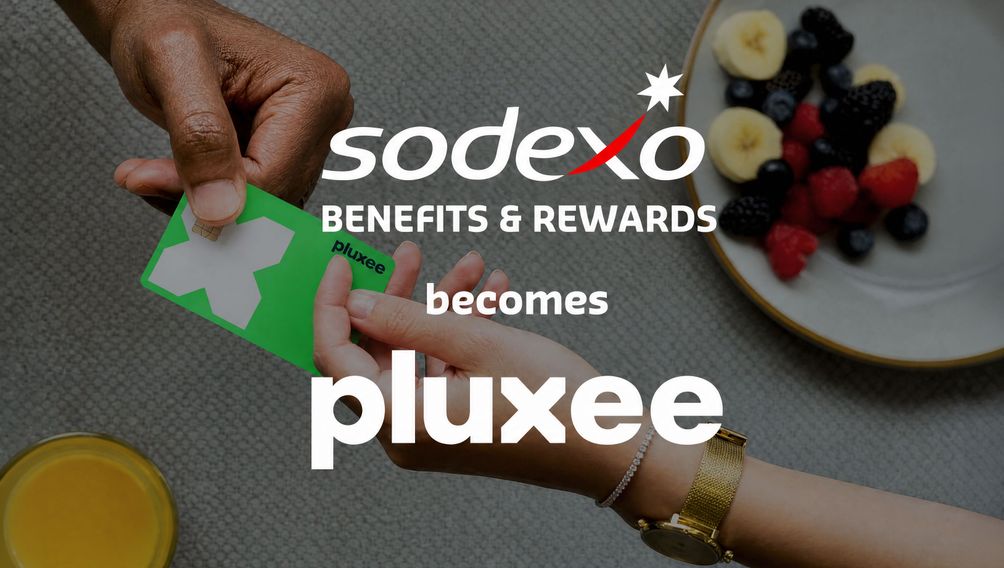
Sodexo Benefits and Rewards Services — today Pluxee — is the number one player in the Polish employee benefits market.
For decades, the company has helped employers keep their teams motivated: its cards, vouchers, and benefits platforms are used in Poland by more than 2 million users and 50,000 companies. In 2023, the company was spun off from the Sodexo group and underwent a global rebrand to Pluxee — a brand building digital solutions for HR, marketing, and sales. As their technology partner, we were tasked with translating their business model into a working system: a multi-tenant loyalty and benefits platform in which every employer gets its own employee portal.
We built the platform in 2022, still under the Sodexo brand. A year later, independently of our project, the company was spun off from the Sodexo group and underwent a global rebrand — today it operates in the Polish market as Pluxee, a brand building digital solutions for HR, marketing, and sales.
Our approach is business first. Technology follows.

"I wasn't looking for a vendor who'd tick off a feature list. I was looking for a partner who would understand how my consultants really work. I tested the app live during client meetings, raised my comments, and the team iterated right alongside me. The result is a system that responds to real needs, not to assumptions from a brief."

The Business Challenge
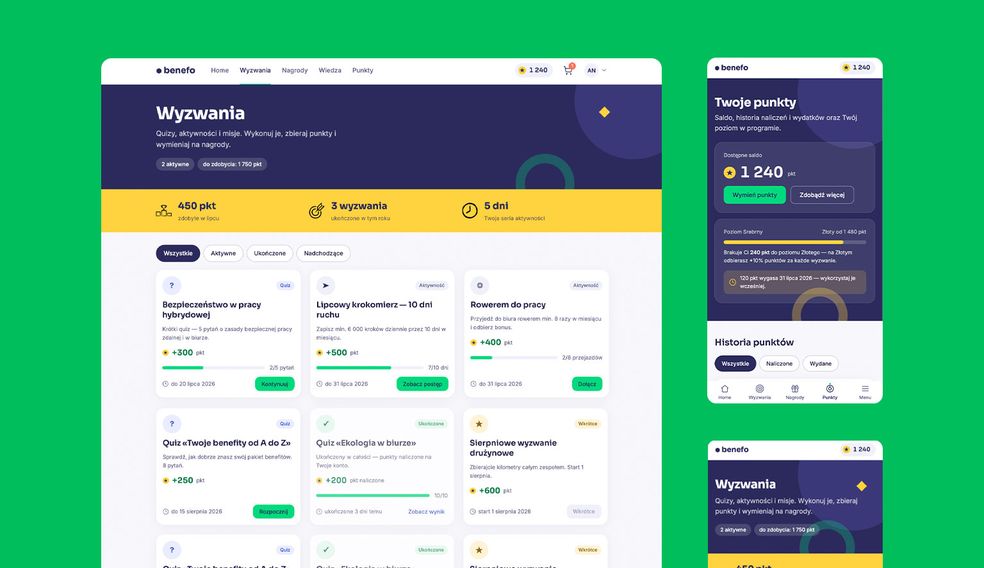
Sodexo's employee portals are functionally similar to one another: an employee logs in, sees the available tasks — declarations, wellbeing programs, loyalty campaigns — browses the rewards catalog, and manages their points and funds. But beneath that similarity lies a different reality: every portal belongs to a different employer, with different access permissions, different CMS content, different icons, different layout.
Scaling Without Multiplying Frontend Work
In a traditional approach, every new employer means a separate frontend project: a new repository, its own configuration, its own deployment, and weeks of onboarding work.
Integrating Two Different API Contracts
Vue Storefront expects data in a specific format, while Sodexo's backend, built earlier around its own internal processes, delivered it its own way. For the frontend to work, a middle layer was needed: a custom REST API in Node.js translating the VSF contract into Sodexo's backend language. This wasn't a single task but a separate deliverable, priced and delivered on its own.
Technical Challenges
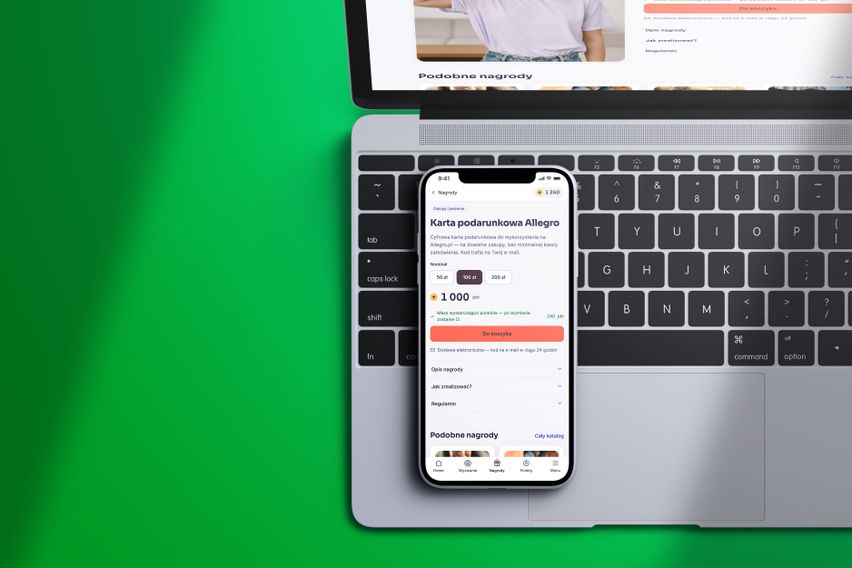
Behind Sodexo's simple portal interface stood a complex technical spec: dozens of tenants running on a single codebase, 10 modules outside the Vue Storefront standard, more than 40 REST API endpoints, and a rewards catalog requiring a search engine. Below are the five decisions and challenges that determined whether the platform could scale — or just launch.
Multi-System Integration
Project kicked off right as Vue Storefront was in the middle of a version transition. VSF 1.12 with the Capybara theme was stable and proven, while VSF 2.4 was architecturally more modern but still maturing, with a new data structure that would need its own separate analysis for the duration of the project. We ran the numbers before pricing it out: moving to v2 meant an extra 100 to 200 hours of work, but it clearly cut down technical debt over a three-year horizon.
Multi-Tenant Architecture: Core Repo + Theme Submodule
The central problem was scaling. We split the repository into two layers: a core repo holding the shared business logic (modules, API integrations, general translations), identical across every deployment, and a theme repo as a git submodule — the per-tenant layer (module extensions, branding, icons, additional translations, specific form fields). The result: adding a new client just means plugging a new theme submodule into the core, with no code duplication, and a bugfix in the core rolls out automatically to every tenant.
10 Modules Built From Scratch
Vue Storefront ships with the standard stuff: cart, user, catalog, orders. Sodexo needed 10 modules that weren't part of it: Challenge (task zone), WallOfFame (recognition and rankings), ACL (per-tenant and per-role access), Points (points and conversion to funds), Declaration (declaration forms), Layout (dynamic page layout from the API), Consent (consent management), CMS (backend-driven URL pages), Contact (contact form), and Wall (content feed). Each one required designing the data structure, endpoints, and implementation both in the VSF API layer (Node.js) and on the frontend.
Rewards Catalog on ElasticSearch
The rewards section is more than a simple product listing. It runs on ElasticSearch: multi-attribute filtering, full-text search, sorting, categories and brands as filters, and lazy loading. At this catalog scale, with rewards spanning different price categories and brands, an engine-based approach to search was a prerequisite for acceptable listing page performance.
Documentation Before Code
Before a single line of production code was written, we delivered two documents: pre-implementation Vue documentation (a description of every view, the API data behind it, interactions, and any inconsistencies we'd spotted) and a list of VSF API endpoints (more than 40 REST interfaces, split into standard and custom modules, each with its HTTP method and contract description). This was a deliberate process choice: when integrating with an external backend, nailing down the API contract before implementation let us catch inconsistencies before they became more expensive to fix.
Solutions and Implementation
A multi-tenant PWA environment is a complex spec: individual icons per tenant, descriptions, different homepage layouts. Partway through the project, questions arose on Sodexo's side about the scope of this spec — some multi-tenant elements ultimately ended up being handled on the client's side. Sodexo extended the timeline to devote more attention, post-implementation, to manual and automated testing.
That's an honest look at what an integration project with a large organization actually looks like: the timeline can be sensitive to decisions made on the other side of the table, and the spec shifts as understanding of the problem grows. Our role isn't just writing code — it's holding the line on direction and technical quality no matter what those variables do.
Business and Technical Outcome
Sodexo came away with a platform whose architecture genuinely fits its business model. A new corporate client no longer requires a new frontend project — it requires a new extension of the existing project as a sub-module. The difference between weeks and days in partner onboarding isn't a tagline; it's the direct consequence of a specific architectural decision made at the start of the project.
On our end: the project confirmed we can work with an enterprise client in a documentation-before-code mode, manage ambiguity on a backend we don't control, and build architecture designed for scale — not just for function.
Our Experts
Frontend Developer with hands-on experience in Magento and Shopify. One of the few Storyblok implementation specialists in the market. At Beecommerce for 8 years.
Senior Full Stack Developer with 20 years of experience. Expert in PHP, Java, and Python. Certified Magento specialist with 7 years in the platform.
Is your e-commerce holding back your growth?
See how our enterprise-class solutions eliminate technical debt and boost conversion rates!
Technologies we use
Our specialists use proven software development tools to make sure your product works as it should and meets user requirements.
We tailor technologies individually to each project to ensure optimal performance in terms of performance, security, as well as SEO and UX.
Working on the tools found at the client's site, we take care of updating them, improving performance and optimizing the code.
We are constantly evolving to provide our clients with world-class quality projects.




Key Takeways
01
Multi-tenancy is an architectural decision, not a feature. Make it up front — retrofitting multi-tenancy after the fact costs many times more than designing for it from the start.
02
The API layer is a separate deliverable. When you're working with an external backend that doesn't speak your framework's language, middleware isn't "an integration" — it's a product. It needs its own pricing, documentation, and sign-off.
03
Documentation before code has a cost and a value. A dozen or so hours of upfront analysis shows up on the invoice as a line item. Weeks of refactoring because of an API contract mismatch don't come with a price tag — but they cost just as much.
04
ElasticSearch for catalogs with hundreds of products and multiple attributes isn't overkill — it's a prerequisite for acceptable performance.
05
Enterprise projects have their own dynamics. The timeline can shift for reasons on the client's end. A technology partner's value is measured by how it maintains technical quality under those conditions.
Summary
The benefits platform rollout for Sodexo Benefits and Rewards Poland shows how a single architectural decision translates into a business model. A multi-tenant headless web app on Vue Storefront, built on a core repo plus theme submodule split, more than 40 REST API endpoints, and a rewards catalog on ElasticSearch, means onboarding the next employer is no longer a linear function of the number of employers.
Today, Sodexo has a platform that genuinely fits its model: every new corporate client is a new theme plugged into the shared core, not a separate frontend project, so onboarding shrinks from weeks to days. For Sodexo, scalability stops being a cost and becomes an advantage: the more employers on the platform, the more clearly it shows the value of an architecture built for growth, not just for function.

Trusted by
Why Beecommerce?
Business-IT Synergy
We act as a strategic bridge. We connect the world of KPIs with engineering discipline. The Business Lead + Tech Lead tandem ensures technology delivers on business and strategic goals.
Enterprise-Grade
We build scalable Headless ecosystems resilient to sales spikes. We provide full synergy with ERP, PIM, and CRM, permanently eliminating the barrier of technical debt.
Continuity & Security
We understand the cost of a minute of Enterprise downtime. We deliver Fail-Safe systems with hard SLAs. We ensure Compliance and stability of transactional processes.
Beecommerce Hypercare
We design systems that report margin, retention, and real profit — not just site traffic. We deliver actionable data, turning technology into a predictable growth engine.