
Headless Commerce and Omnichannel: Connecting All Sales Channels Without Chaos in 2026
TL;DR – In Brief
Headless commerce is an architecture that separates the backend (the store's engine) from the frontend (the visual layer, enabling the management of multiple sales channels from a single hub.
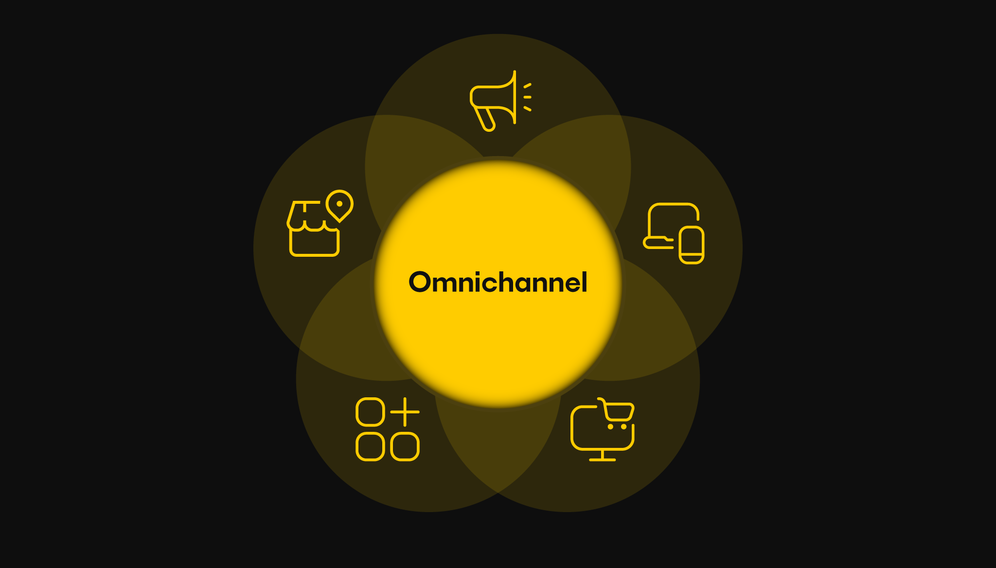
Omnichannel is a strategy ensuring a consistent customer experience across all touchpoints: your website, mobile app, marketplace, and physical retail store.
A single, central backend in a headless architecture can power all these channels simultaneously, simplifying the management of products, pricing, and inventory levels.
Companies with a mature omnichannel strategy report 10–15% higher customer retention and 25% higher profit margins.
Key benefits include reduced stock-outs and faster implementation of changes, cutting time-to-market (TTM) by 20–40%.


A customer adds a product to their cart in your app, but then sees a different price at your physical store. Sound familiar? This chaos is an everyday reality for many businesses trying to manage sales in several places at once. The solution isn't yet another system; it's a fundamental architectural shift. Imagine running a single, central kitchen that supplies several restaurants, a food truck, and a catering company. Each outlet has its own distinct style, yet all dishes originate from the same reliable source.
This analogy perfectly describes how headless commerce integrates with an omnichannel strategy. Headless is an approach that separates the "brain" of your store (the backend, handling products, orders, and inventory) from its "face" (the frontend, which is what the customer sees). This powerful, singular engine allows you to connect any number of interfaces: your website, a mobile application, or even a point-of-sale (POS) system in a physical store. This flexibility is precisely what's needed to build a cohesive customer experience and regain control over your sales operations.
What is Omnichannel, and Why Is It So Crucial in 2026?
Omnichannel is not synonymous with multichannel. Multichannel selling simply means having an online store, a presence on Allegro, and a brick-and-mortar location. Omnichannel, however, is a strategy that ensures these channels communicate with each other, creating a single, seamless experience for the customer. The purchasing journey becomes non-linear. A customer might start browsing products on their smartphone during their commute, add them to favorites on their laptop at home, and then finalize the purchase at a physical store, where a sales associate already has visibility into their shopping history.
Why is this so important? Customer expectations are rising. Market research from 2025 clearly shows that companies with a well-thought-out omnichannel strategy achieve 10–15% higher customer retention and 25% greater margins than those operating in silos. Customers are more loyal to brands that value their time and simplify their lives. Inconsistencies, such as different online and offline pricing or a lack of information about product availability at a nearby store, are a direct path to eroding trust.
In 2026, omnichannel is no longer a competitive advantage; it's the market standard. Giants like Allegro, Amazon, and Zalando have accustomed consumers to convenience and exceptional UX. To keep pace, you not only need a perfectly functioning store but also have to persuade the customer to purchase through the channel you control, where you achieve the highest margin. While this isn't always feasible, it's worthwhile to at least have a strategy for it. This might include lower prices, an attractive return policy, a virtual fitting room, or in-store pickup and testing.
How Headless Commerce Enables Flexible Multi-Channel Management
Headless architecture's core is a simple yet powerful concept: separating the frontend from the backend. The backend is your business engine, storing data on products, orders, and inventory. The frontend is the visual layer, the user interface. These two communicate via an API (Application Programming Interface). You can liken this to a waiter who relays an order from the dining room (frontend) to the kitchen (backend) and then delivers the finished dish. That dish could also be picked up by a delivery courier like Glovo or Uber.
This independence enables the connection of multiple distinct frontends to a single, central backend. This is precisely what makes headless a robust foundation for an omnichannel strategy. Let's look at how this plays out in practice across various sales channels.
| Sales Channel | Frontend Type | Backend Communication |
|---|---|---|
| Online Store (Web) | Website (e.g., Next.js, React) | API |
| Mobile Application | Native app (iOS/Android) or PWA | API |
| Marketplace (Allegro, Amazon) | Integration via connector/API | API |
| POS System (physical store) | POS application | API |
| Interactive Kiosk (in-store) | Web/Native application | API |
As you can see, the API is the common denominator that decouples the look and feel and functionality of each channel from the central business logic. You can completely redesign your website without touching the backend processes. You can rapidly launch a new mobile application that leverages the same product and pricing data. This translates to faster implementation of changes, lower development costs, and greater room for innovation. Unlike monolithic systems, where everything is rigidly interconnected, headless architecture allows for the independent evolution of each channel. You can read more about this in our article What is a Monolithic Application?.
Omnichannel Reference Architecture: Key Components
To implement an omnichannel strategy based on headless commerce, you'll need several proven components. Think of it like building with LEGO bricks: each element plays a specific role, and together they form a robust structure.
E-commerce Engine (Backend Core): This is the operational brain, managing products, pricing, orders, and payments. Popular solutions include Magento 2, Shopify Plus with Hydrogen, Medusa.js, or commercetools.
Headless CMS (Content Management System): This tool empowers marketers to freely manage content (product descriptions, blog posts, banners) without needing developer involvement. Content is delivered to all channels via API. Storyblok Headless CMS is a frequently chosen solution, partly due to its visual editor.
PIM (Product Information Management): This becomes essential with a large number of products. It serves as a central repository for managing all product information, ensuring its consistency across all channels.
Search Engine: Advanced search capabilities (e.g., Algolia, Klevu) are fundamental for a positive customer experience. Fast and accurate results, regardless of the channel, directly impact conversion rates.
Integration Systems (Middleware/API Gateway): This connective tissue links all components, ensuring secure and efficient communication between systems. The Composable Commerce architecture, which involves combining best-of-breed tools, is built upon this very pillar.
Honne is a framework built on 15 years of experience in mid-market and enterprise commerce in Europe and globally.
The table below presents an example of a modern technology stack for an omnichannel strategy.
| Component | Example Technologies | Role in Omnichannel |
|---|---|---|
| Commerce Engine | Magento 2, Shopify, Medusa.js | Managing products, orders, customers |
| Headless CMS | Storyblok, Contentful | Content management for all channels |
| PIM | Akeneo, Pimcore | Centralization and distribution of product information |
| Search | Algolia, Klevu | Fast and accurate search results |
| Frontend | Next.js, React Native, PWA | Presentation of content and products in each channel |
| Integrations | Alokai, custom APIs | Connecting all systems into a cohesive whole |
This modular construction offers a significant advantage. If, in two years, you decide to upgrade your search system, you can do so without needing to rebuild your entire store.
Real-time Inventory Synchronization: Technical Patterns
One of the biggest challenges in omnichannel is maintaining up-to-date inventory levels. Nothing sours the customer experience quite like ordering a product only to find it's just sold out. Headless architecture, being API-driven, provides a robust solution to this problem.
How it works, simplified:
A centralized inventory system (OMS/ERP) serves as the single source of truth for product availability.
When a customer purchases a product through any channel (online, in-app, in-store), that channel immediately notifies the central system via its API.
The central system then dispatches notifications (known as webhooks or events) to all connected frontends and marketplaces, informing them of the updated inventory status.
Each frontend then updates the product availability information in real time.
This entire process takes mere fractions of a second. Consequently, if the last unit of a product is sold in a physical store, the POS system updates the ERP, which then instantly marks the product as unavailable on the website and in the mobile app. This effectively eliminates the risk of selling the same product twice.
What's absolutely essential (must-have)?
A central inventory management system (OMS/ERP).
A reliable and fast API for two-way communication.
Event-driven mechanisms, such as webhooks.
What's optional, but helpful (nice-to-have)?
Inventory caching with a short refresh time to offload the ERP.
Monitoring systems to track synchronization accuracy.
Leveraging AI for demand forecasting and proactive inventory management.
Measurable Business Outcomes: Reducing Stock-outs and Boosting Cross-Channel CR
Implementing omnichannel with a headless architecture is an investment that yields concrete, measurable benefits. This isn't technology for technology's sake; it has a tangible impact on your financial performance.
Reduced Stock-outs: Customers encounter fewer unavailable products, which diminishes frustration and decreases abandoned carts. Industry reports indicate that a 10% reduction in stock-outs can boost revenue by 1–3%.
Increased Cross-Channel Conversion Rate (CR): A consistent experience encourages purchases. Options like "check availability online, pick up in-store" (click & collect) can elevate overall conversion by 5–15%.
Enhanced Customer Experience (CX): Satisfied customers return. Consistent pricing, promotions, and purchase history build trust. According to research, 80% of customers are more likely to buy from brands that offer personalized experiences.
Faster Time-to-Market (TTM): A single backend paired with flexible frontends allows for quicker introduction of new products and marketing campaigns across all channels simultaneously. Companies leveraging headless solutions often reduce TTM by 20–40%.
Below, we present estimated costs and implementation effects based on project scale, reflecting Polish market realities.
Investing in Headless Commerce is a strategic move toward a more agile and resilient business, one that can genuinely respond to the demands of modern customers.
| Deployment Type | Estimated Cost (USD) | Implementation Time | Time to First Impact | Potential CR Increase | Stock-out Reduction |
|---|---|---|---|---|---|
| Headless MVP (1 channel) | $20,000 – $50,000 | 2 – 4 months | 1 – 2 months | 3 – 5% | 5 – 10% |
| Full Omnichannel (2-3 channels) | $50,000 – $125,000 | 4 – 7 months | 2 – 3 months | 5 – 15% | 10 – 20% |
| Enterprise Composable (3+ channels) | $125,000 – $300,000 | 7 – 10 months | 3 – 5 months | 10 – 25% | 15 – 30% |
How to Begin Your Omnichannel and Headless Journey
Transitioning to a headless architecture and implementing an omnichannel strategy might seem like a formidable undertaking, but an evolutionary, rather than revolutionary, approach is key.
Analysis and Planning (Discovery Phase): Start by understanding your existing systems, processes, and objectives. What's the biggest pain point? Which channels are most critical? What's your budget? A properly conducted Technology Audit will illuminate the best path forward.
Small Step, Big Impact (MVP): You don't have to overhaul everything at once. Begin by implementing headless for a single, most crucial channel, such as a new frontend for your online store. You'll quickly see results and gain valuable experience. Services like Rapid MVP Creation enable you to test ideas with limited risk.
Selecting the Right Tools: Choose components that align with your scale and needs. Always prioritize flexibility, scalability, and ease of integration.
Partnering with Experts: Collaborating with a team experienced in building headless systems and understanding business objectives is crucial for project success.
FAQ: Frequently Asked Questions About Headless Commerce and Omnichannel
Multichannel involves selling across various channels that operate independently. Omnichannel, on the other hand, is an integrated strategy where all channels collaborate to create a cohesive customer experience.
The initial investment might be higher. However, in the long run, headless reduces the total cost of ownership (TCO) due to greater flexibility and less technical debt.
When you're planning to expand into multiple channels, your current platform is limiting UX/UI, you're experiencing performance issues, or you want to decouple from a single technology vendor.
Yes, it is crucial for consistent content management across all channels. It empowers marketers to publish content without relying on developers. Beecommerce has extensive experience in this area.
It depends on the scale. An MVP for a single channel might take 2–4 months, while a full implementation for three or more channels could range from 7 to 10 months.
Yes. The frontend's flexibility allows for full optimization regarding Core Web Vitals (LCP, INP, CLS), which Google rewards with higher search rankings. We cover this in more detail in our article How Headless E-commerce Technology Impacts Your Online Store's Google Search Rankings?.
An API is an interface that allows different software programs to communicate with each other. In headless commerce, it acts as the bridge connecting the backend with the frontends, enabling secure data exchange. Read more in the article What is an API? Get to Know the Application Programming Interface.
Absolutely. An approach based on a Discovery phase and implementing an MVP for a single channel allows you to validate the concept with minimal risk and cost.
Summary: One Backend, Many Possibilities
Headless commerce isn't just a technological novelty; it's a strategic response to the challenges of modern retail. By separating the backend from the frontend, you gain the essential flexibility needed to deliver consistent customer experiences across all channels, from your website to point-of-sale systems.
Success hinges on a robust architecture, efficient real-time data synchronization, and a measurable approach to business outcomes. Reduced stock-outs, increased conversion rates, and enhanced customer loyalty are tangible benefits derived from a well-implemented omnichannel strategy. This foundation enables your company to grow in a controlled and scalable manner.
Are you facing the decision to modernize your e-commerce and looking to build a cohesive omnichannel strategy? Contact BeeCommerce: contact@beecommerce.pl. We'll help you understand how headless commerce can streamline your business, prepare an implementation plan, and guide you through the entire process, starting with a technology audit or a paid Discovery phase (4–8 weeks, $7,500–$15,000).


Sources
MACH Alliance Global Annual Research Hub (MACH Alliance, 2025) – https://machalliance.org/global-annual-research
What is Headless Commerce? (Object Edge, 2020) – https://www.objectedge.com/blog/how-commercetools-headless-is-different/
Google Developers, Core Web Vitals (Google) – https://web.dev/articles/vitals
Shopify Plus Pricing (Shopify) – https://www.shopify.com/plus/pricing
Honne Discovery Call — 30 minutes with our expert.
No presentations, no pitch decks. We talk about your business goals, what's holding you back, and whether starting the project is even worth it. Sometimes our best recommendation is "don't do this" and save money.


Więcej artykułów na ten temat znajdziesz na naszym blogu
AI in field sales: how an AI assistant is reshaping the Rep's job and company results in 2026
Discover how an AI sales assistant automates reporting, optimizes routes, and boosts sales efficiency. Stop spending evenings updating your CRM.
10 min
Read more
Clickable prototype over a 50-page spec in e-commerce
Why a clickable backoffice mockup speeds up board decisions in e-commerce projects and cuts implementation risk. A practical guide.
9 min
Read more
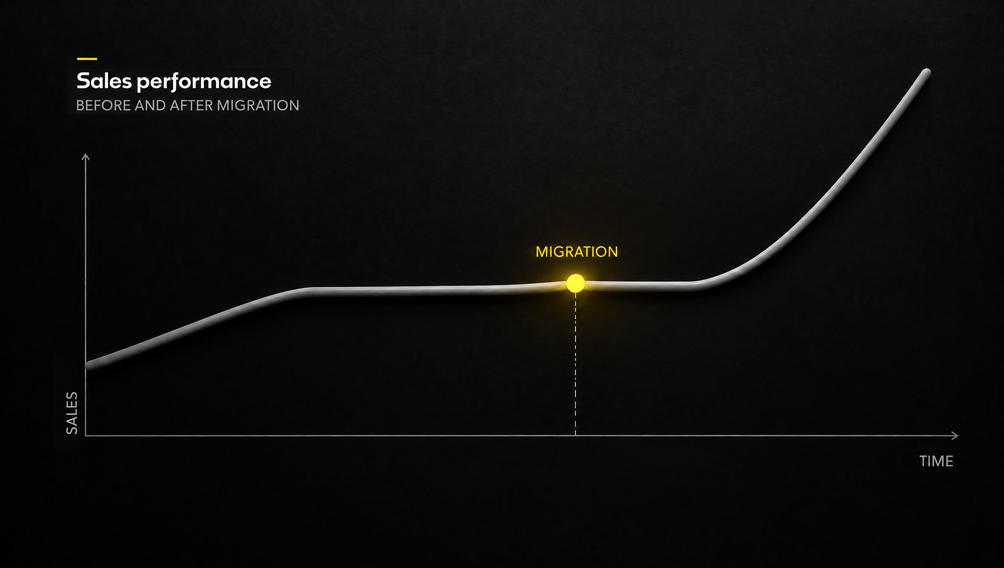
Seamless store migration: how to plan your cutover and mitigate risk
Planning an e-commerce store migration? Learn how to choose a cutover strategy (big-bang vs. strangler), minimize downtime, and monitor the first 72 hours post-launch to protect your sales and rankings.
12 min
Read more