



Headless Commerce and SEO in 2026: A Guide to Winning (and Losing) in Google
As of: Q2 2026
TL;DR
SEO success in headless architecture heavily depends on rendering strategy. ISR (Incremental Static Regeneration) is the most common choice for e-commerce, offering the best tradeoff between speed (Core Web Vitals) and data freshness.
A poorly executed migration can destroy years of visibility work. The essentials: a 1:1 301 redirect map and a technical audit before launch. Every mistake here costs traffic.
Minor traffic fluctuations (5–15% drop) for 2–4 weeks post-migration are normal. Longer or deeper drops signal serious technical problems requiring immediate intervention.
Headless, thanks to its API-based structure, provides an advantage in AI optimization (GEO). Structured data (Schema.org) and modular content are fuel for Google AI Overviews.
A headless implementation is an investment of 250 000 - 700 000 PLN. The preceding technology audit and migration plan costs 10 000 - 30 000 PLN — and protects against costly implementation mistakes.


Everyone says headless commerce guarantees speed. That's true. But few mention it's also the fastest way to destroy years of SEO work if the migration is done without a solid plan. In 2026, as Google's algorithms increasingly rely on AI Overviews and Core Web Vitals are table stakes, technical precision matters more than ever.
The headless approach gives great freedom in shaping the frontend — a major advantage. At the same time, it transfers full responsibility for technical SEO onto the implementation team. It's a double-edged sword. This article will show you how to wield it with surgical precision, not like an amateur in a minefield. You'll learn where the pitfalls lie and how to unlock headless's full potential to dominate search results.

Why Headless Is an SEO Double-Edged Sword
Headless architecture separates the front-end presentation layer (what the customer sees) from back-end business logic. They communicate via API. Developers get free rein to build blazing-fast, optimized interfaces using modern frameworks like Next.js or React. In theory, this sounds like every SEO specialist's dream. In practice, that freedom comes at a price: responsibility.
Traditional platforms like Magento or Shopify come with many SEO mechanisms out of the box. In headless, everything — from meta tags to sitemaps — must be consciously designed and implemented from scratch on the frontend. This is precisely where projects achieve spectacular success or painful failure.
That freedom is a powerful tool. And the first decision that falls on your shoulders concerns the technical foundation — the page rendering approach.
Headless advantages for SEO/GEO:
Full control over speed: A custom-built frontend allows you to achieve Core Web Vitals scores (LCP, INP, CLS) that monoliths can only dream of. This is a direct, strong ranking signal for Google.
High optimization flexibility: You can implement any SEO optimization, run advanced A/B tests, and react instantly to algorithm changes without waiting for a platform update.
AI-ready structure: The modular nature of content in a headless CMS and freedom in structured data implementation create an ideal environment for Generative Engine Optimization (GEO).
Headless challenges for SEO/GEO:
Client-side (or server-side) rendering: Choosing the wrong rendering strategy can prevent Googlebot from seeing your content, leaving the page invisible.
Content management: Without a dedicated headless CMS, marketing loses autonomy and every text change requires a developer.
Technical implementation: Every SEO element — from
canonicaltags tohreflang— must be implemented perfectly. There's no room for mistakes.
Rendering Strategies: SSR, SSG, ISR and Your SEO
In the headless world, how the server delivers content to the browser (and to Google's crawler) is critical. This is probably the most important technical decision you'll make in the context of SEO. The choice determines speed, data freshness, and indexability.
Here's a simplified comparison of the three main strategies.
| Rendering Strategy | Description | E-commerce Advantages | E-commerce Disadvantages |
|---|---|---|---|
| SSR (Server-Side Rendering) | Page is rendered on the server with each request, then sent to the browser as ready HTML. | Fast first load (FCP), good for dynamic content (prices, stock), easy indexation. | Higher server load, slower under heavy traffic, potentially slower TTFB. |
| SSG (Static Site Generation) | Pages are fully generated at build time (at deployment) and served as static HTML files. | Extremely fast loading, low hosting costs, resilient to traffic spikes. | Content doesn't update in real time, requires full rebuild on every change, poor for dynamic products. |
| ISR (Incremental Static Regeneration | A blend of SSG and SSR. Pages are statically generated but can be updated in the background at specified intervals or on demand. | SSG speed with the ability to update content, low server load, ideal for e-commerce (e.g. prices refreshed every 5 min). | Requires more complex configuration, content may not be 100% current at every second. |
ISR is the sweet spot for most e-commerce stores. It offers the page speed of static generation — critical for Core Web Vitals — while enabling regular refreshes of key data like prices and stock availability. At Beecommerce, we recommend this tradeoff most often because it balances performance with business reality.
Migrating to Headless: How Not to Lose Your SEO Traffic
The decision to go headless is open-heart surgery on your business. The biggest risk is losing the organic traffic you've built over years. A poorly executed migration can undo that work in a matter of weeks. In our experience, this is where disaster strikes most often.
To avoid it, focus on several key elements.
301 redirect map (1:1): This is non-negotiable.
Every old URL must have one exact counterpart in the new structure. Relying on general rules or automations is asking for trouble.
Green flag: Before launch, you have a complete, verified map in a spreadsheet that maps every old URL to its new equivalent.
Red flag: "We'll handle redirects after launch" or "We have a general rule for categories." That's a visibility risk you can't afford.
Preserving key SEO elements:
All meta tags,canonicaltags,hreflangfor language variants, and structured data (Schema.org like Products or Author) must be migrated and correctly implemented in the new frontend.Testing before and after:
Before launch, the new site must be accessible to Googlebot in a test environment. You verify that it can correctly render and index the pages. After launch, continuous monitoring is essential.
After a successful migration, expect minor traffic fluctuations (up to 15%) for 2–4 weeks. That's normal while Google "learns" the new structure. If drops are deeper or last longer, that's an alarm signal requiring immediate intervention. After this period, traffic should actually rise above the starting level. Before you begin, a thorough technology audit is the best insurance policy for your traffic.
GEO in 2026: How Headless Supports AI Overviews
So far we've been playing defense — how not to lose traffic. Now let's go on offense. Generative Engine Optimization (GEO) means optimizing content not just for classic algorithms, but primarily for the AI models that generate answers in Google AI Overviews. Here, headless gives you a significant edge.
GEO requires content to be highly structured, unambiguous, and easy to process by machines. Headless architecture is built for exactly this.
| Feature | Headless Commerce | Monolithic E-commerce |
|---|---|---|
| Data structure | Modular, API-first. Easy to create entities and structure data in a headless CMS. Modules like Author, FAQ implemented via drag-and-drop. | Integrated, often "locked" in templates. Harder to extract and structure. |
| Schema.org implementation | Full freedom. Ability to implement any complexity of custom markup. | Limited by platform or plugin capabilities, often requires custom development. |
| Content personalization for AI | High flexibility, A/B testing, dynamic content generation for specific queries. | Limited by templates, slower adaptation cycle to AI changes. |
| Speed of adaptation to AI changes | Very high. Frontend changes don't require modifying the entire system — addressed pointedly. | Low. Every change is potentially a major development project. |
With headless you can serve AI well-prepared "building blocks" of information instead of forcing it to parse a monolithic HTML blob. You have full control over structured data, allowing you to precisely describe each product, its attributes, reviews, and prices in the language AI understands best. This not only improves visibility but builds your brand's authority as a credible data source.
Honne is a framework built on 15 years of experience in mid-market and enterprise commerce in Europe and globally.
What Does It Really Cost? A Realistic Headless Budget
Let's get concrete. Moving to headless commerce is a serious investment. Long-term you gain higher conversion and lower maintenance costs, but the initial outlay is higher than a standard implementation.
Here are typical cost ranges for projects on the Polish market.
| Service | Floor | Average | Top | Timeline | First results |
|---|---|---|---|---|---|
| Magento Headless | 150,000 PLN | 300,000 PLN | 700,000 PLN | 12–20 weeks | 6–8 weeks |
| Shopify Hydrogen | 120,000 PLN | 250,000 PLN | 450,000 PLN | 8–14 weeks | 4–6 weeks |
| Composable Commerce | 300,000 PLN | 800,000 PLN | 1,500,000 PLN | 6–12 months | 12–16 weeks |
source: BeeCommerce estimates, Q2 2026
These figures show headless is a solution for mature businesses that will translate its benefits into additional margin. Final cost is influenced by ERP/PIM integration complexity, number of markets and languages, and the scope of custom functionality.
The discovery phase is worth treating as a critical budget control step. It's an investment of 10,000–30,000 PLN that enables precise scope estimation and avoids costly surprises. Starting with an AI-generated prototype or MVP is also a sound strategy.
A mid-sized Polish manufacturer (50 employees, GMV 25M PLN, B2B+B2C) can spread a headless migration across 3 phases: discovery (30K PLN, 4 weeks) → MVP for one market (220K PLN, 3 months) → full rollout with second market (200K PLN, 2 months). Total investment: ~450K PLN spread over 6 months. Assuming current GMV is maintained and conversion improves by 15% (a typical headless result), break-even comes at 12–18 months.
This is an investment in technological independence that pays back not just in conversion, but in operational agility.
FAQ
Costs start around 120,000 PLN for smaller projects (e.g. Shopify Hydrogen) and can reach 1,500,000 PLN for large, complex Composable Commerce systems. An average Magento Headless implementation runs around 300,000 PLN.
Shopify Plus is a great tool, but its monolithic nature and Liquid templating can limit advanced Core Web Vitals optimization and custom structured data implementation. When you need full frontend control for maximum SEO/GEO flexibility, solutions like Shopify Hydrogen become the better choice.
Yes, that's a sensible strategy. An MVP implementation focuses on key purchase paths or a single market. It lets you validate the concept quickly, minimizes financial risk, and allows you to gradually expand functionality based on real data.
At that GMV level, headless commerce becomes very competitive. It gives greater control over SEO/GEO, development flexibility, and no revenue share fees — which significantly lowers TCO over time. Shopify Plus may be simpler to start, but its limitations and scaling costs can become a bottleneck.
Viable enterprise alternatives to monolithic Magento include: Composable Commerce (architecture based on best-of-breed independent components), Magento Headless (keeping the stable Magento backend with a modern frontend), and in some scenarios Medusa.js for teams that value full open-source code control, or Sylius.
Typically 12–20 weeks, depending on project complexity, number of integrations, and custom functionality. First measurable results — such as improved Core Web Vitals on key pages — can appear as early as 2 weeks after launch.
Yes. Storyblok gives marketers autonomy over content creation and optimization, enables dynamic management of meta tags and structured data, and makes scaling content across multiple languages and channels much easier — all critical for GEO strategy. It also means marketing teams can confidently manage multilingual content without involving IT.
The main risks are: an incomplete 301 redirect map, Googlebot indexation issues (caused by a poor rendering strategy), loss of structured data, and performance degradation if the new frontend isn't properly optimized for Core Web Vitals.
Summary: Architecture Is Strategy
Moving to headless commerce in 2026 is not a purely technological decision. It's a strategic one. This architecture can give you a powerful edge in search results — but only if you approach it with a plan and awareness of the potential risks.
Success requires careful planning, an optimal rendering strategy (usually ISR), a precise migration with a 1:1 redirect map, and continuous monitoring. Headless delivers the flexibility and control that monoliths can't offer, which is invaluable in the age of AI Overviews. Remember, though: headless is not an end in itself. It's a tool. And ultimate success depends entirely on how you use it.
Before making the decision, answer these questions:
Does your current platform genuinely limit page speed and UX optimization possibilities?
Is your content structured and ready for the AI era, or is it a "wall of text"?
Do you have the resources and a plan for a safe, technically sound SEO migration?
Are you prepared for an investment with a return horizon of 24–36 months?
Considering a move to headless commerce without losing your search rankings? Contact BeeCommerce. We help with technology audits, TCO calculations, and headless migration strategy — always starting with a Honne Discovery (30 days, 20,000 PLN).


Honne Discovery Call — 30 minutes with our expert.
No presentations, no pitch decks. We talk about your business goals, what's holding you back, and whether starting the project is even worth it. Sometimes our best recommendation is "don't do this" and save money.


You can find more articles on this topic on our blog
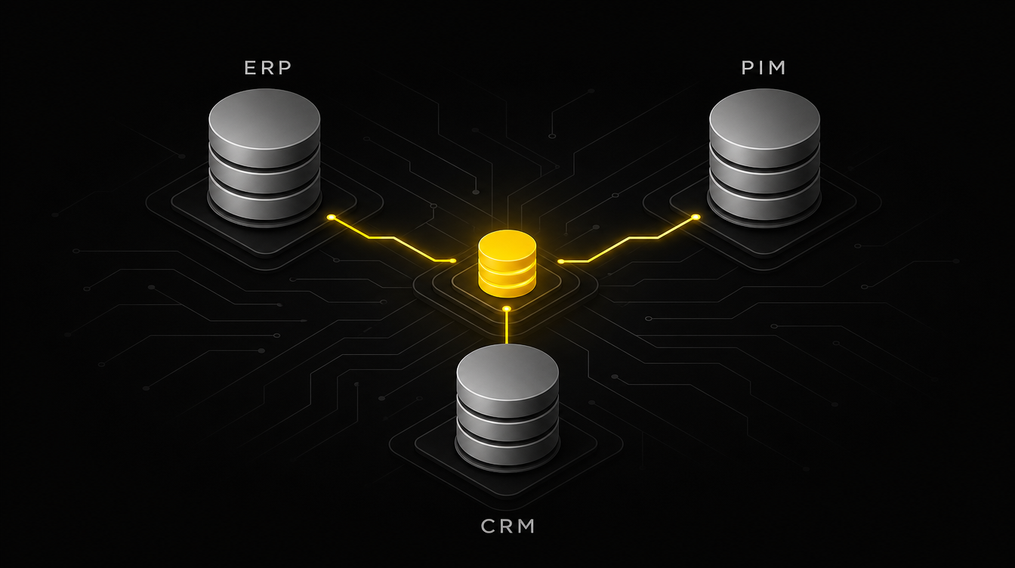
ERP, PIM, and CRM in Headless Architecture: How Integrations Drive Implementation Success in 2026
Picture running a large online store. Customers place orders, products ship out, inventory levels shift, and your marketing team plans new campaigns. For…
12 min
Read more
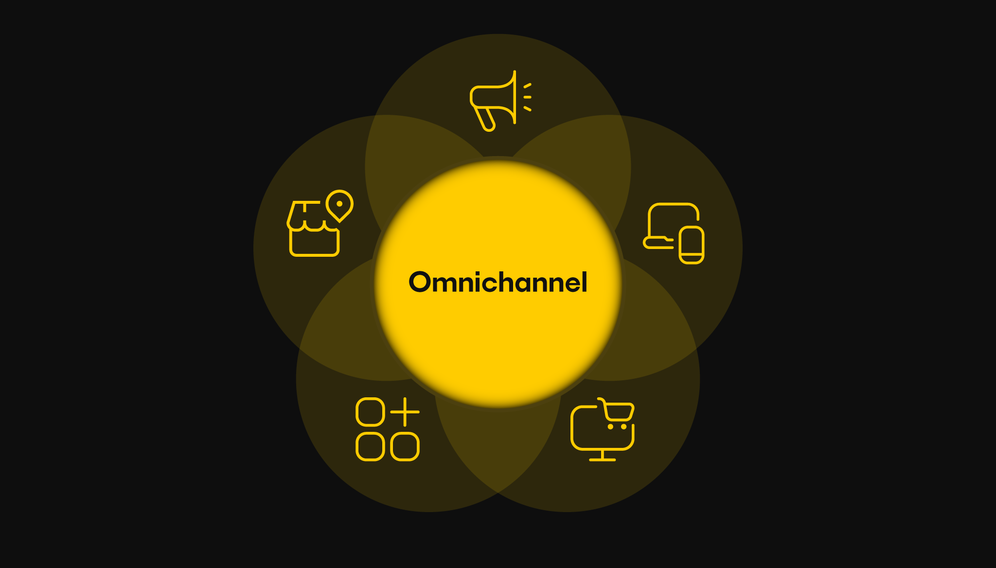
Headless Commerce and Omnichannel: Connecting All Sales Channels Without Chaos in 2026
A customer adds a product to their cart in your app, but then sees a different price at your physical store. Sound familiar? This chaos is an everyday rea…
9 min
Read more

AI Personalization in Headless Commerce 2026: Stack, Costs, and Rollout Order
Master AI personalization in headless commerce for 2026. Discover the ultimate tech stack, real-world implementation costs, and a step-by-step rollout plan.
8 min
Read more